Understanding CO2 vs Diode Laser for Cutting and Engraving
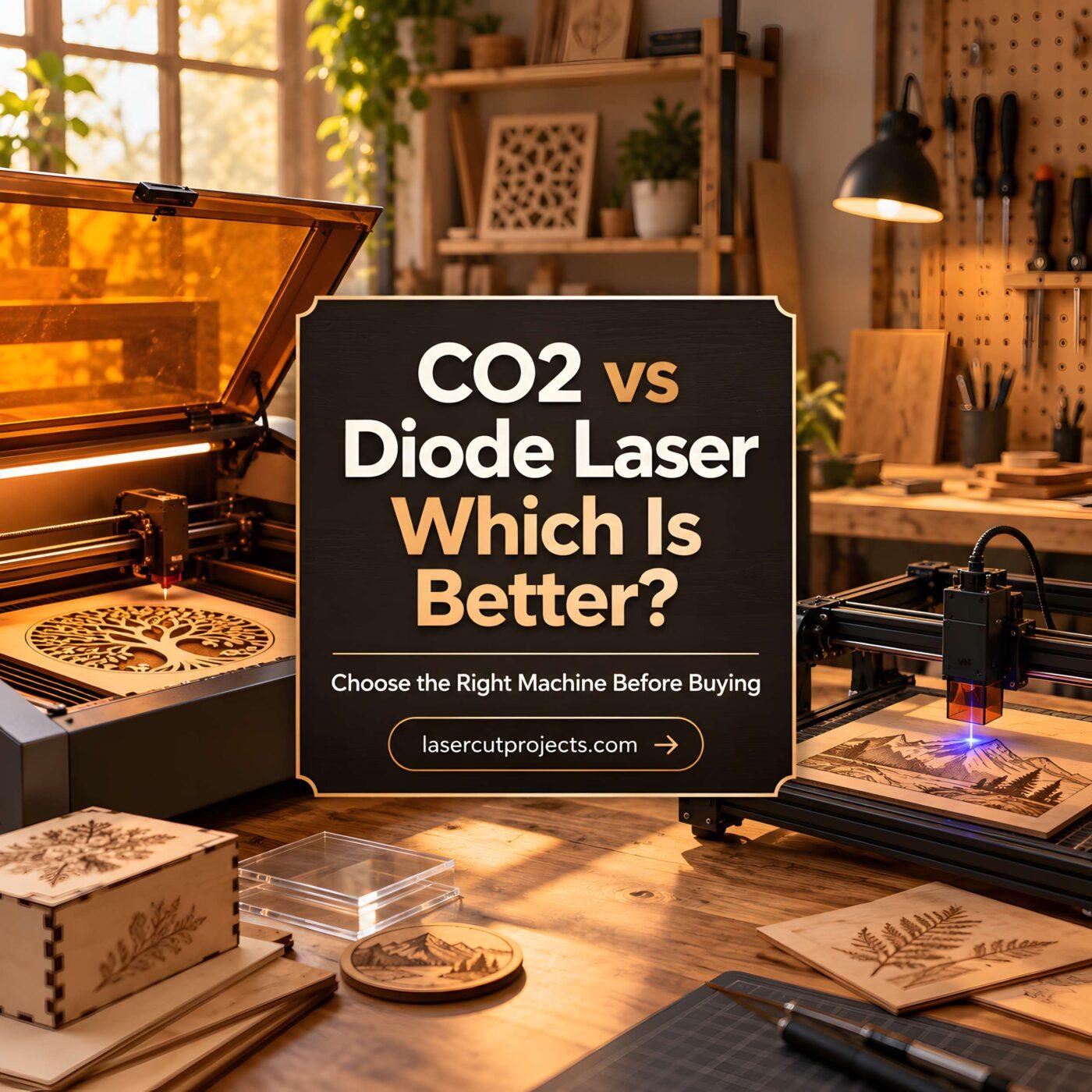
Choosing between a CO2 laser and a diode laser is one of the biggest decisions when getting started with laser cutting and engraving. Both machines can produce detailed designs, personalized gifts, decorative signs, and craft projects, but their capabilities are not the same.
A CO2 laser is generally better for cutting a wider range of nonmetal materials, especially clear acrylic and thicker wood. A diode laser is often the more affordable and compact choice for beginners who mainly want to engrave wood, leather, and coated surfaces or cut thin materials.
The right choice depends on your budget, materials, workspace, and how frequently you plan to use the machine.

This guide compares CO2 vs diode laser technology, cutting performance, engraving quality, speed, operating costs, and safety to help you choose a machine that fits your projects.
What Is a CO2 Laser?
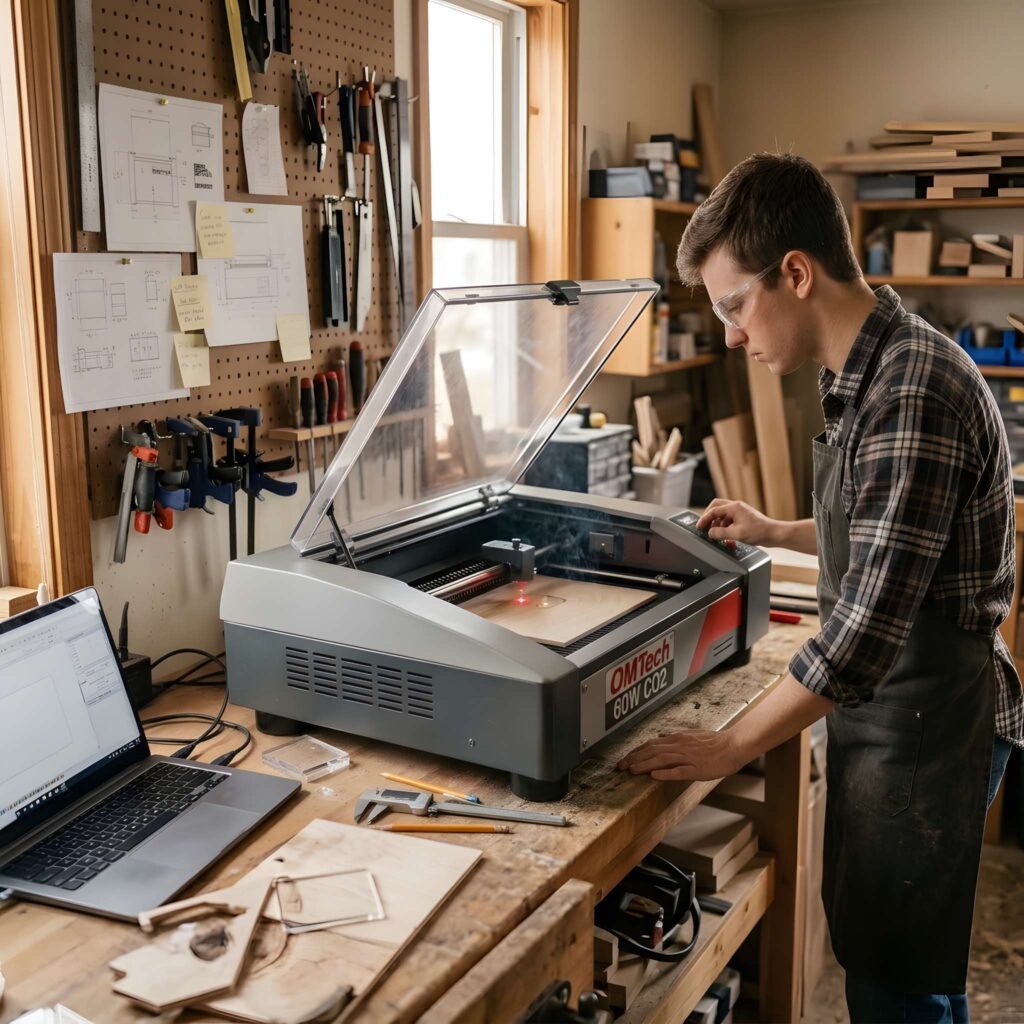
A CO2 laser is a gas laser that generates infrared light using a gas mixture containing carbon dioxide. Most conventional CO2 cutting and engraving machines operate at a wavelength of approximately 10.6 micrometers (10,600 nm).
This wavelength is readily absorbed by many organic materials and acrylic, making CO2 lasers particularly effective for cutting and engraving nonmetallic materials.
Common CO2 laser applications include:
- Cutting plywood, MDF, and solid wood
- Cutting clear, colored, and opaque acrylic
- Engraving leather and suitable fabrics
- Creating decorative signs and ornaments
- Producing custom packaging and display items
- Manufacturing small batches of craft products
CO2 laser machines are available in various sizes, from compact desktop systems to industrial cutters with large working areas.
Many hobbyist models use glass laser tubes and require cooling, exhaust ventilation, and regular optical maintenance.
Advantages of CO2 Lasers
CO2 machines offer several benefits for makers and small businesses. Their strong performance on acrylic and wood makes them versatile tools for decorative products and detailed cutouts.
They are also well suited to repetitive cutting jobs, especially when paired with larger work areas and efficient material handling.
Disadvantages of CO2 Lasers
CO2 machines generally cost more to purchase and maintain than entry-level diode systems. Many also require more workspace, cooling equipment, and careful alignment of mirrors and other optical components.
Their greater cutting capability does not automatically make them suitable for metal fabrication. Standard hobby CO2 machines are primarily intended for nonmetal materials.
What Is a Diode Laser?
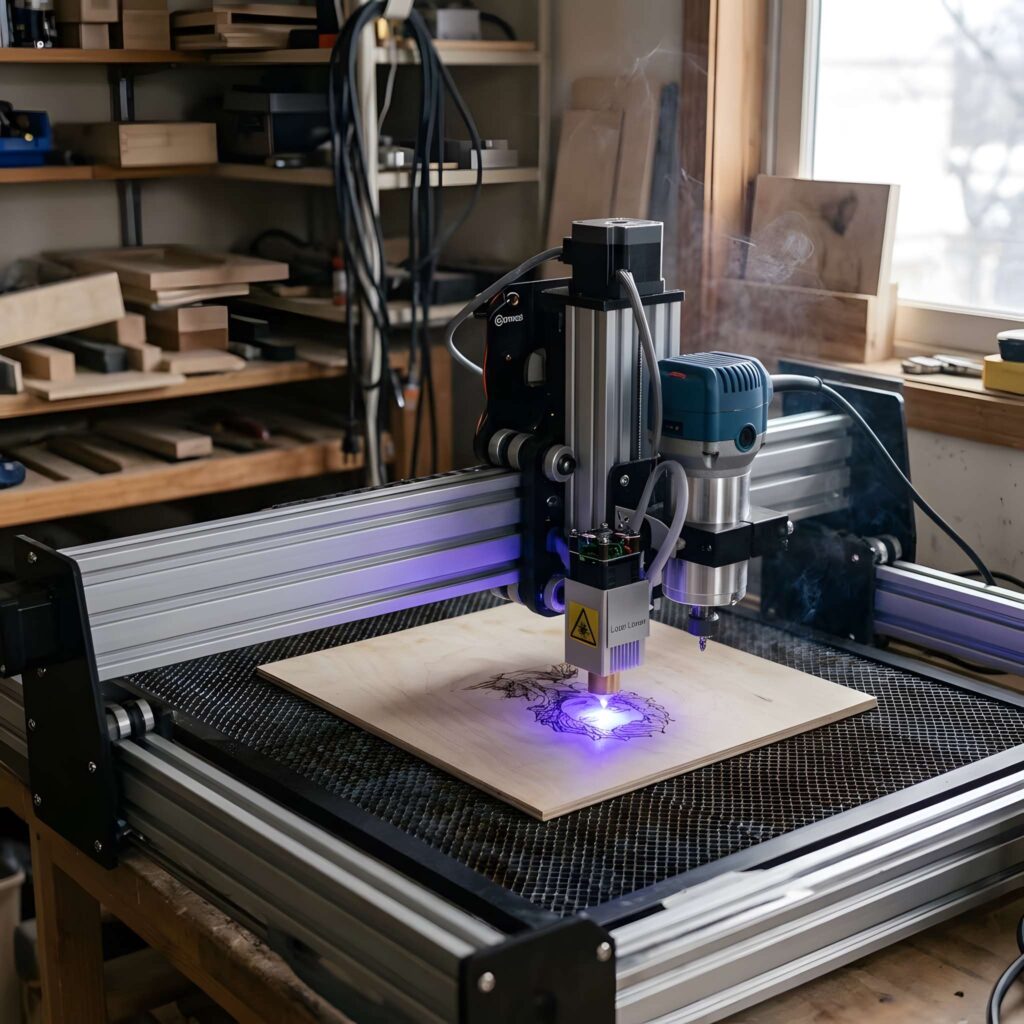
A diode laser uses semiconductor components to produce a focused beam of light. Many consumer diode laser engravers operate around 445–455 nm, within the blue visible-light spectrum.
Diode laser machines are popular among hobbyists because they are often compact, relatively inexpensive, and straightforward to set up.
Common diode laser applications include:
- Engraving wooden signs and coasters
- Personalizing leather accessories
- Cutting thin plywood and craft wood
- Engraving anodized aluminum
- Marking coated metal surfaces
- Creating custom ornaments and small gifts
Diode laser systems typically use air-cooled laser modules rather than the water-cooled glass tubes found in many CO2 machines.
However, the cutting ability of diode lasers varies considerably with optical output power, beam quality, material, and machine design.
Advantages of Diode Lasers
The main advantages are affordability, compact size, and relatively simple maintenance.
They can be particularly attractive to people who want to experiment with laser engraving before investing in a larger workshop machine.
Disadvantages of Diode Lasers
Blue diode lasers have important material limitations. Most cannot effectively cut transparent acrylic because the beam passes through rather than being sufficiently absorbed.
Lower-power models can also require multiple passes to cut materials that a suitable CO2 machine could process more efficiently.
Open-frame diode machines additionally require careful attention to eye protection, enclosure design, and ventilation.
CO2 vs Diode Laser: Key Differences
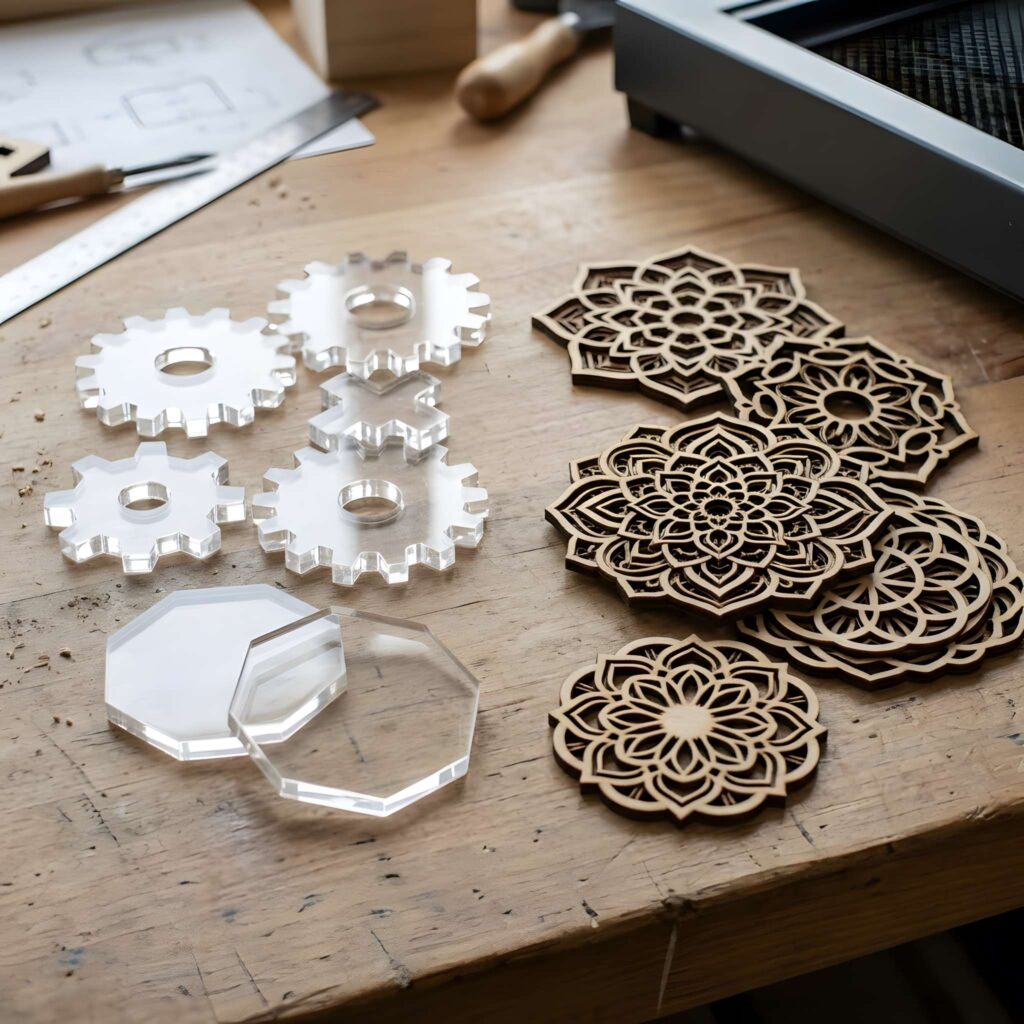
The following table summarizes the main differences between typical hobbyist CO2 and blue diode laser systems.
| Feature | CO2 Laser | Diode Laser |
|---|---|---|
| Laser technology | Gas laser | Semiconductor laser |
| Typical wavelength | 10,600 nm | 445–455 nm |
| Common hobbyist optical power | 40–100 W and higher | 5–40 W |
| Entry-level price | Higher | Lower |
| Wood cutting | Excellent | Good, power-dependent |
| Clear acrylic cutting | Excellent | Generally unsuitable |
| Dark acrylic cutting | Excellent | Possible with some systems |
| Wood engraving | Excellent | Excellent |
| Coated metal marking | Possible | Possible |
| Bare metal engraving | Limited without specialized methods | Limited without specialized methods |
| Cooling | Often water-cooled | Usually air-cooled |
| Maintenance | More involved | Generally simpler |
| Workspace | Often larger | Often more compact |
| Best suited for | Cutting and production | Hobby engraving and light cutting |
Power ranges are representative, not universal. Compare actual optical output, not electrical input or combined marketing power figures.
CO2 vs Diode Laser Cutting Performance
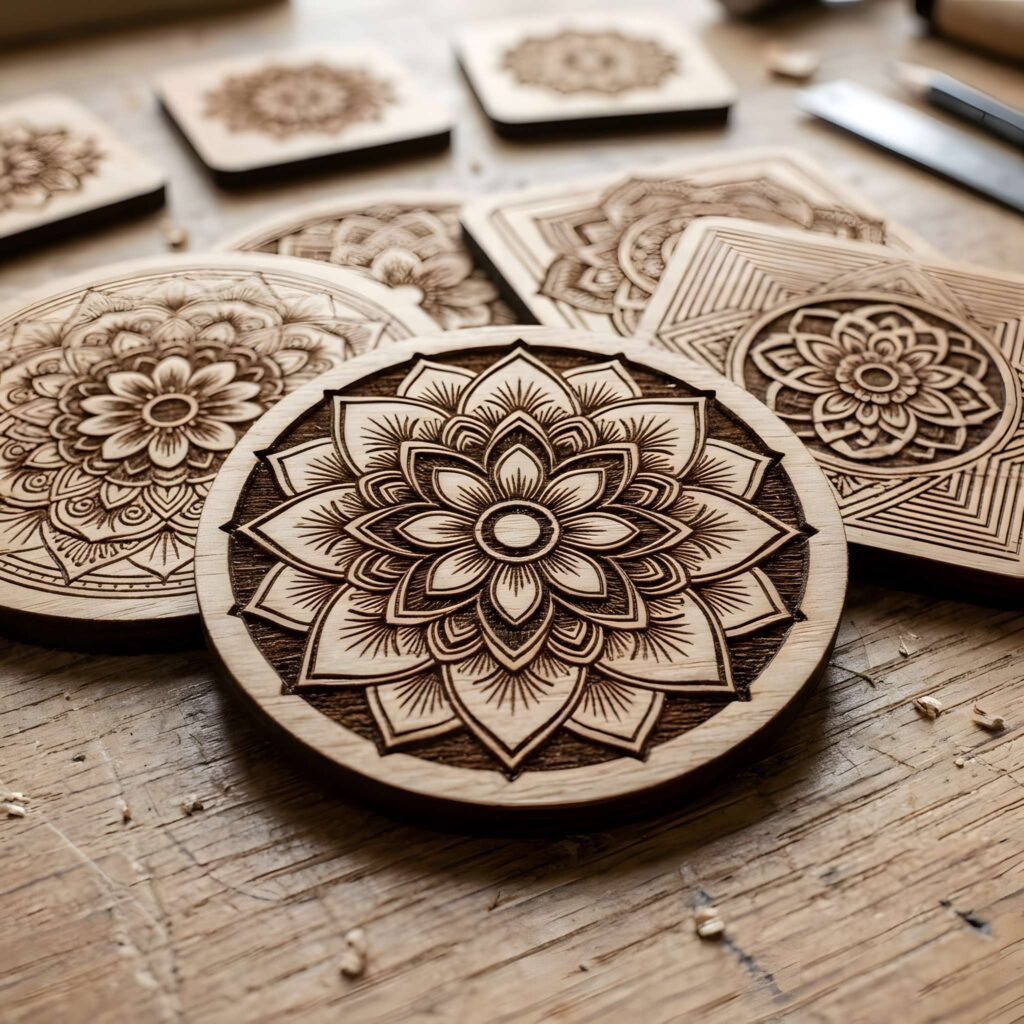
Cutting performance is one of the most important differences between these laser types.
Although both machines can cut wood and certain other materials, their wavelengths, available power levels, and optical characteristics influence which materials they can process efficiently.
Cutting Wood and Plywood
Both CO2 and diode lasers can cut wood, but the results depend on thickness, species, moisture content, glue composition, and machine settings.
A CO2 laser typically offers an advantage for thicker wood and repetitive production work.
A diode laser can still produce excellent results with thin plywood, basswood, and other craft materials.
For example, a suitable high-power diode machine may cut 3 mm plywood in a single pass under favorable conditions, while lower-power models may require several passes. Neither outcome is guaranteed for every plywood product.
A CO2 machine with sufficient power can often process similar material faster, although cutting speed also depends on beam quality and machine mechanics.
Cutting Acrylic
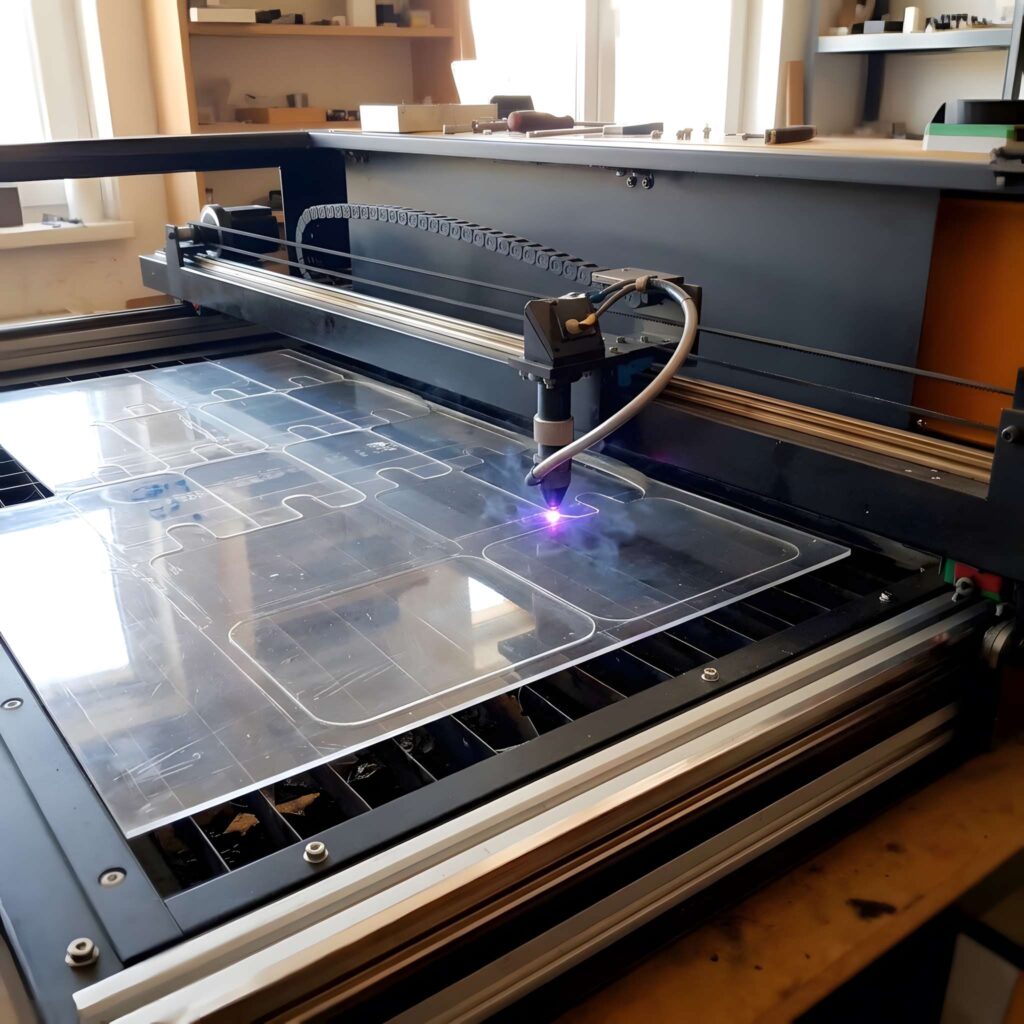
Acrylic is where CO2 lasers have a particularly clear advantage.
CO2 laser light is strongly absorbed by acrylic, including transparent sheets. With appropriate settings and material, a CO2 laser can create smooth, polished-looking edges.
Blue diode laser light, by contrast, passes through most clear acrylic. This makes conventional blue diode systems generally unsuitable for cutting transparent acrylic.
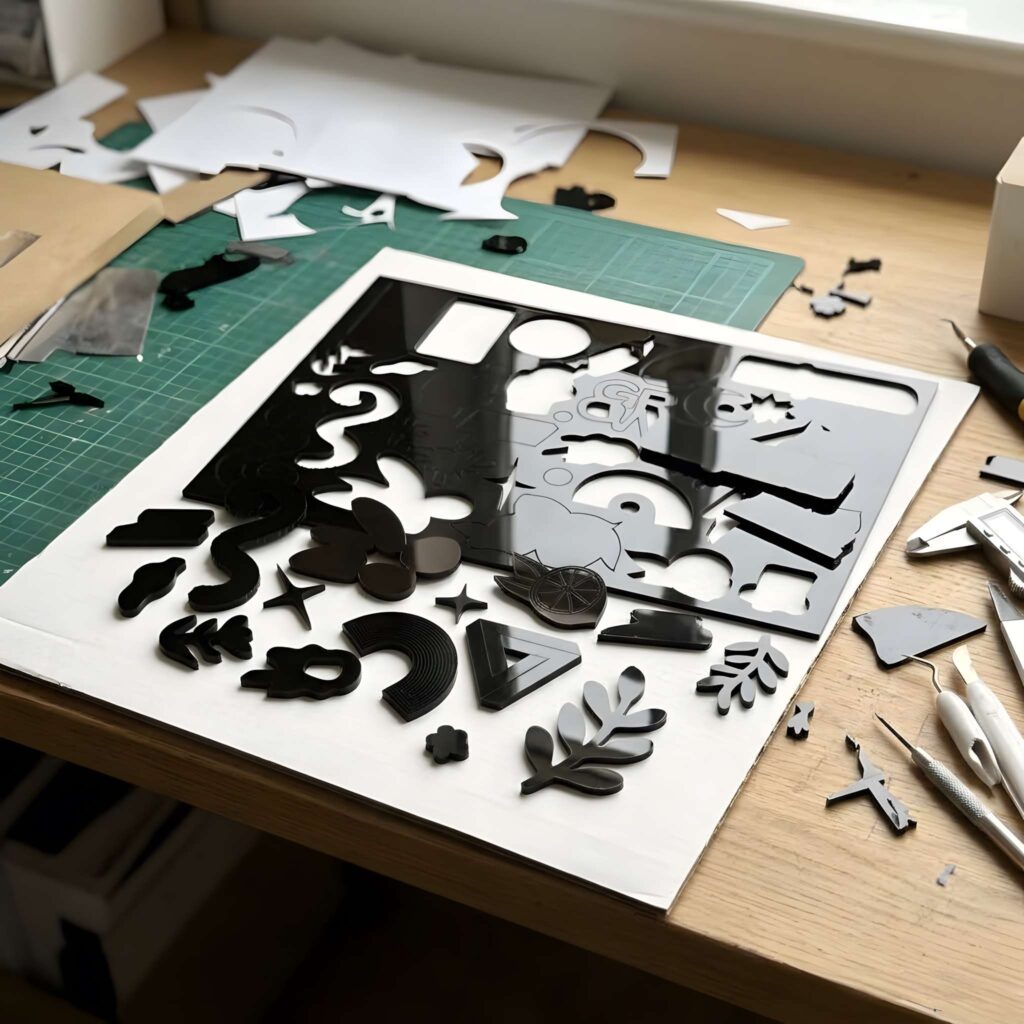
Dark or opaque acrylic may absorb blue light more effectively, allowing some diode lasers to cut it, but results vary by pigment and formulation.
Winner for acrylic cutting: CO2 laser.
Cutting Leather, Fabric, and Cardboard
Both laser types can cut selected leather, paper, cardboard, and fabrics.
CO2 systems often provide greater productivity, especially with larger designs or thicker materials.
Diode lasers can work well for smaller craft projects when the material absorbs their wavelength adequately.
Avoid PVC, vinyl, and unidentified synthetic materials. Some materials release toxic or corrosive fumes when heated or cut by a laser. Always confirm the material’s composition and the machine manufacturer’s guidance before processing it.
CO2 vs Diode Laser Engraving Performance
Engraving performance is more closely matched than cutting performance.
Both technologies can create intricate patterns, lettering, illustrations, and personalized designs.
Engraving on Wood
Wood engraving is a major strength of both machines.
A diode laser can produce detailed, high-contrast designs on suitable wood surfaces. Many hobbyists use diode engravers for wooden coasters, signs, ornaments, and customized gifts.
CO2 lasers are equally capable of detailed wood engraving and may complete larger jobs faster when configured appropriately.
Engraving quality depends on focus, spot size, material consistency, motion accuracy, and the chosen settings—not simply laser power.
Engraving on Metal
Neither a standard blue diode laser nor a conventional hobby CO2 laser is the ideal solution for deep engraving bare metal.
Some diode lasers can mark anodized aluminum and coated metals directly. Specialized marking sprays or coatings can also enable certain markings with compatible machines.
For direct, durable engraving of bare stainless steel, aluminum, and other metals, a fiber laser is generally the more appropriate technology.
Engraving Fine Details
Both laser types can produce fine details, although different optical designs influence the achievable spot size and line quality.
A well-focused diode laser may create very fine lines on suitable materials, while a properly configured CO2 machine can produce detailed artwork and text with high consistency.
Winner for wood engraving: Tie for many hobby applications. The specific machine, optics, and material matter more than the laser category alone.
Which Laser Is Faster?
CO2 lasers are generally faster for cutting jobs that require substantial power, especially thicker wood and acrylic.
For engraving, however, speed is not determined solely by laser type.
A diode machine with an efficient motion system can engrave quickly, while a CO2 machine with a larger work area and suitable scan settings may achieve higher throughput on repetitive jobs.
Consider the complete production process:
- Material preparation and positioning
- Laser focusing and job setup
- Cutting or engraving time
- Cooling and smoke extraction
- Cleaning and finishing the finished product
For a business producing dozens of acrylic signs or plywood decorations, a CO2 machine’s cutting capability may offer significant workflow advantages.
For occasional engraved coasters or personalized wooden gifts, a diode laser may be sufficiently productive without the higher initial investment.
CO2 vs Diode Laser Cost Comparison
Purchase price is another major consideration.
Entry-level diode laser engravers are commonly less expensive than enclosed CO2 systems, but the final cost depends on the model and accessories.
| Expense | Diode Laser | CO2 Laser |
|---|---|---|
| Initial machine cost | Generally lower | Generally higher |
| Cooling equipment | Usually built-in air cooling | Often requires water cooling |
| Ventilation | Required | Required |
| Air assist | Often optional or added | Commonly included or added |
| Replacement laser source | Laser module | Laser tube or RF source |
| Optical maintenance | Usually simpler | Mirrors and lenses may require maintenance |
| Enclosure | May require separate purchase | Often integrated |
A low-cost open-frame diode machine may become significantly more expensive once you add a suitable enclosure, exhaust system, air assist, and other accessories.
Similarly, a CO2 machine’s total cost can include a chiller, exhaust upgrades, replacement tubes, mirrors, lenses, and periodic servicing.
Compare the total cost of a complete, safe working setup rather than the machine price alone.
Maintenance and Lifespan
Diode laser machines typically require relatively straightforward maintenance.
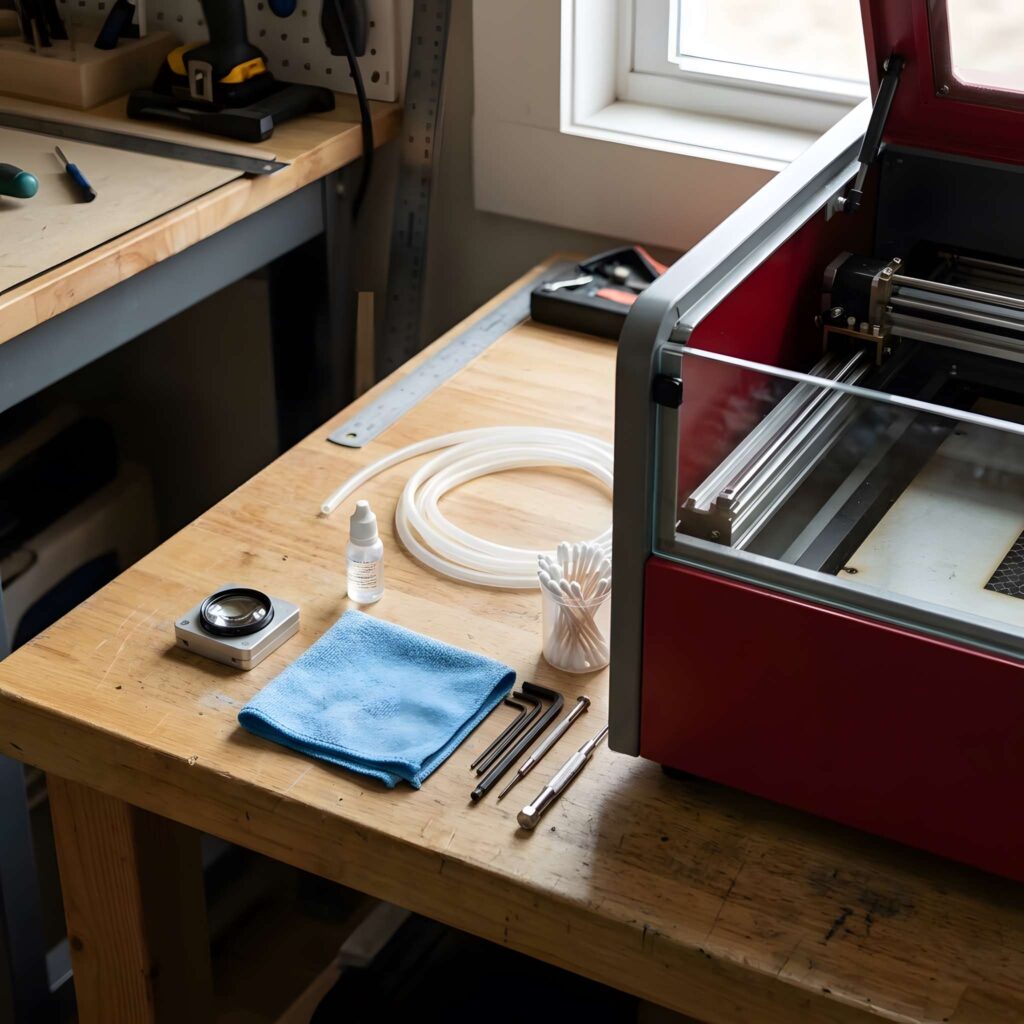
Routine tasks include cleaning the lens, removing debris, checking belts, inspecting wiring, and maintaining the air-assist system.
CO2 laser machines often require additional attention to mirrors, lens cleanliness, cooling-water condition, tube performance, and optical alignment.
Laser-source lifespan varies substantially by manufacturer, power settings, cooling conditions, and usage patterns.
It is not reliable to assume that every diode laser lasts longer than every CO2 laser. Check the manufacturer’s rated service life and replacement-part availability.
Safety: CO2 vs Diode Laser
Both technologies can cause serious eye injuries, burns, and fires. Neither should be considered inherently safe simply because it is marketed for beginners.
Important safety measures include appropriate wavelength-rated eye protection, effective fume extraction, fire monitoring, and a correctly designed enclosure.
A closed CO2 machine may offer better containment than an open-frame diode engraver, but only if its enclosure, viewing window, interlocks, and exhaust system are properly designed and maintained.
A fully enclosed diode system can also provide important protection when correctly engineered.
Never leave a laser operating unattended, and always follow the manufacturer’s safety instructions.
For a home workshop, a properly enclosed machine with suitable ventilation is preferable to an unprotected open-frame setup.
Which Laser Is Better for Beginners?
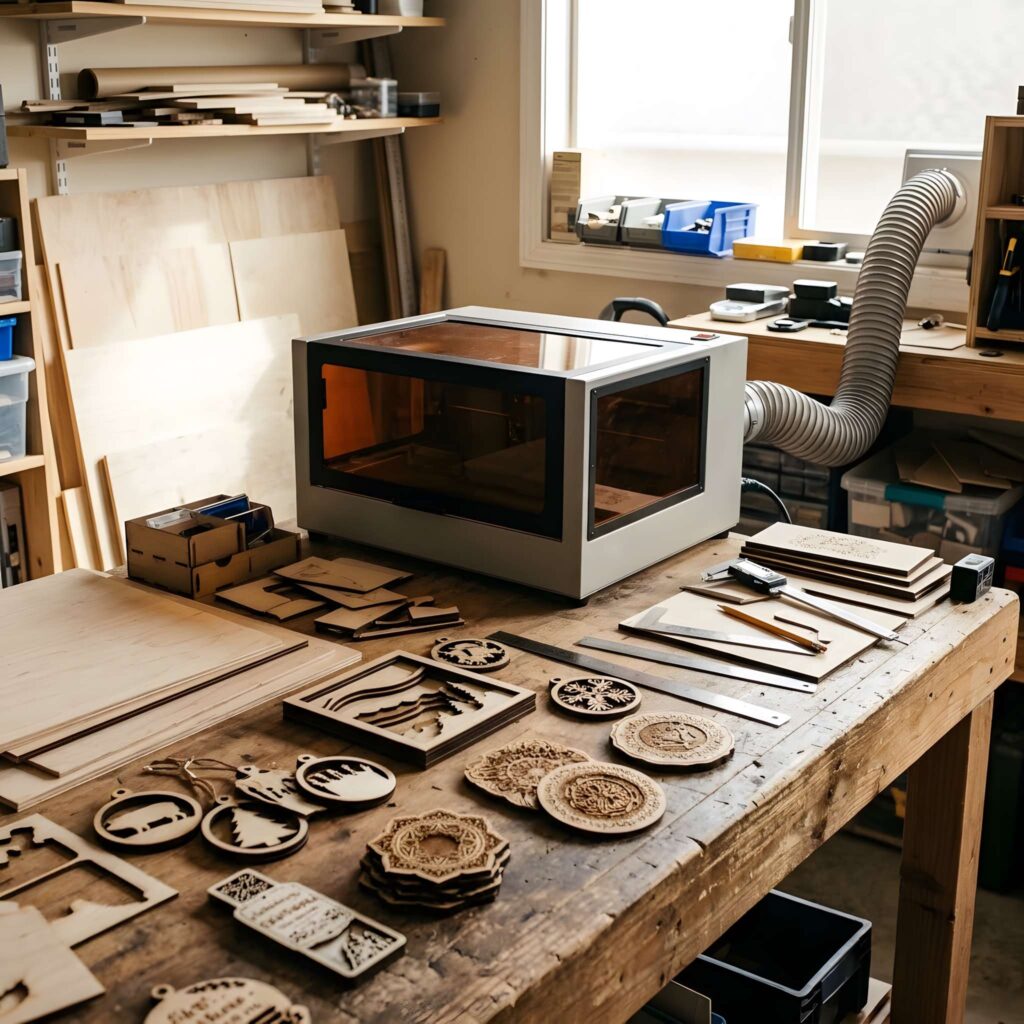
The answer depends on what you want to create.
Choose a diode laser if you:
Want to engrave wooden gifts, coasters, ornaments, and small decorations; have a limited budget; or prefer a compact machine for occasional projects.
Choose a CO2 laser if you:
Plan to cut clear acrylic, make thicker wooden products, produce signs in batches, or need a more versatile cutting machine for a growing craft business.
Best Laser for Small Businesses
For a small business focused on engraved wooden products, a diode laser can be a practical starting point.
For a business selling acrylic signs, detailed plywood decorations, layered wall art, or larger quantities of laser-cut products, a CO2 machine may justify its higher purchase and maintenance costs.
Think about the materials your customers will actually order. A more expensive machine is not necessarily a better investment if its extra capabilities go unused.
Common Mistakes When Choosing a Laser Cutter
One common mistake is comparing advertised wattage without checking optical output. A diode machine advertised with a high electrical power rating may deliver substantially less actual laser power.
Another mistake is assuming that any laser cutter can process every material. Wavelength and material absorption are essential considerations.
Buyers also sometimes overlook ventilation, enclosure costs, replacement parts, software compatibility, and available working area.
Before purchasing, verify the machine’s actual cutting demonstrations on the specific materials and thicknesses you intend to use.
Final Verdict: CO2 vs Diode Laser
When comparing CO2 vs diode laser machines, neither technology is universally better.
A diode laser is an appealing choice for hobbyists who primarily want to engrave wood, make personalized gifts, and experiment with smaller cutting projects at a lower initial cost.
A CO2 laser is generally the stronger option for users who need reliable acrylic cutting, greater nonmetal cutting versatility, and higher production capacity.
For occasional engraving and light craft work, choose a suitable enclosed diode laser. For serious acrylic cutting and more demanding nonmetal production, choose a CO2 laser.
Before buying, consider the materials you plan to use, the workspace available, safety requirements, and the complete cost of ownership.
The best laser cutter is the one that handles your actual projects efficiently, safely, and within your budget.

Frequently Asked Questions
Is a CO2 laser better than a diode laser?
A CO2 laser is generally better for cutting acrylic, thicker wood, and larger quantities of nonmetal products. A diode laser is often better for beginners seeking an affordable machine for engraving and light cutting. The best option depends on the intended materials and workload.
Can a diode laser cut acrylic?
Some blue diode lasers can cut dark, opaque acrylic that absorbs their wavelength. However, most conventional blue diode machines cannot effectively cut clear acrylic. CO2 lasers are usually the better choice for transparent acrylic.
Can a diode laser cut plywood?
Yes. Diode lasers can cut suitable plywood, especially thinner sheets. The achievable thickness and speed depend on optical power, wood species, glue composition, air assist, and machine settings.
Which laser is better for engraving wood?
Both CO2 and diode lasers are excellent for wood engraving. Diode lasers are often cost-effective for smaller hobby projects, while CO2 systems can offer productivity advantages for larger jobs and production environments.
Is a 20W diode laser better than a 40W CO2 laser?
Not necessarily. A 20W optical-output diode laser and a 40W CO2 laser use different wavelengths and interact differently with materials. The CO2 laser generally has an advantage for clear acrylic and may offer better cutting performance, but the result depends on machine design and material.
Do CO2 lasers require water cooling?
Many glass-tube CO2 lasers require water cooling. Some RF-excited CO2 laser systems use air cooling. Always check the cooling requirements of the specific model.
Can CO2 and diode lasers engrave metal?
Both can mark certain coated or treated metal surfaces. Direct engraving of bare metal is limited with conventional hobby CO2 and blue diode machines. Fiber lasers are generally better suited for direct metal marking and engraving.
Which laser is cheaper to maintain?
Diode lasers usually have simpler maintenance requirements, but replacement laser modules can be expensive. CO2 machines may require additional optical maintenance, cooling-system care, and eventual tube replacement. Actual costs depend on the machine and usage.

