


ℹ️ Affiliate Disclosure: This article may contain affiliate links. We may earn a commission at no extra cost to you. Thanks for your support! ❤️
Explore useful laser cut projects for home and workshop organization
Useful laser cut projects become much more interesting when they solve an everyday problem instead of simply adding another decorative object to a shelf. A well-designed cut file can turn plywood or MDF into workshop storage, a desktop organizer, a device stand, a wall shelf, or a compact box for parts that otherwise end up scattered across a bench.
The important differences are not just appearance. Material thickness, tab-and-slot construction, overall size, number of compartments, wall mounting, and assembly method all affect whether a design actually fits the space and purpose you have in mind. The projects below cover different kinds of practical builds, from small desk accessories to larger workshop organization systems.
A much broader range of laser-ready projects exists, so this shortlist concentrates on designs that solve clearly different home, desk, storage, and workshop needs.

The most useful laser cut projects for home and workshop use are storage organizers, tool holders, shelves, device stands, compartment boxes, and everyday wall organizers. Small stands make sense when you want a quick functional build, while larger organizers and modular storage designs are better when the goal is to reclaim bench, desk, or wall space.
What Matters When Choosing a Useful Laser Cut Project
Start with the problem the finished build needs to solve. A phone stand and a 17-inch-wide tool organizer are both practical laser projects, but they require very different amounts of material, cutting time, assembly space, and accuracy.
Material thickness matters most on interlocking designs. Many organizers, boxes, shelves, and stands depend on slots sized around a specific sheet thickness. A nominal 3 mm plywood sheet may not measure exactly 3 mm, so measuring the actual material before cutting can prevent joints that are excessively loose or impossible to assemble.
Think about capacity before appearance. Open desk organizers work well for frequently used items. Compartment boxes make more sense for screws, hardware, jewelry, electronics parts, or other small pieces. Wall-mounted systems are useful when workbench surface area is the real constraint.
Check the finished scale. A design that works as a pencil holder may be too small for workshop tools, while a large organizer can consume more bench space than expected. For shelves and device stands, consider the size and weight of what the finished project must support rather than choosing by shape alone.
Look at assembly complexity. Simple two- or three-piece stands are approachable quick builds. Multi-drawer organizers, divider systems, and larger boxes introduce many more joints, so accurate fit becomes increasingly important.
Quick Picks
- For workshop wall storage: Wall Tool Organizers Laser Cut Bundle — a five-design system aimed at moving tools off the workbench.
- For a larger workbench setup: Laser Cut Tool Desk Organiser Craft Box — a substantial compartment-based organizer for tools and small supplies.
- For small hardware: Laser Cut Files Box Storage Organizer — multiple box sizes with 16 compartments in each layout.
- For flexible small-item storage: Laser Cut Divider Storage Box Organizer — adjustable dividers make the internal layout easier to adapt.
- For an easy everyday build: Phone Stand — a compact device stand supplied for several material thicknesses.
Useful Laser Cut Projects for Home, Desk, and Workshop Organization
1. Wall Tool Organizers Laser Cut Bundle
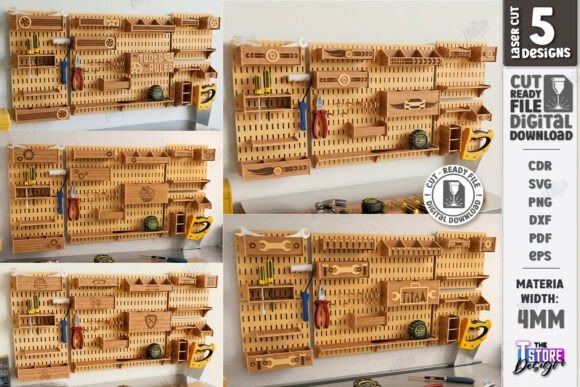
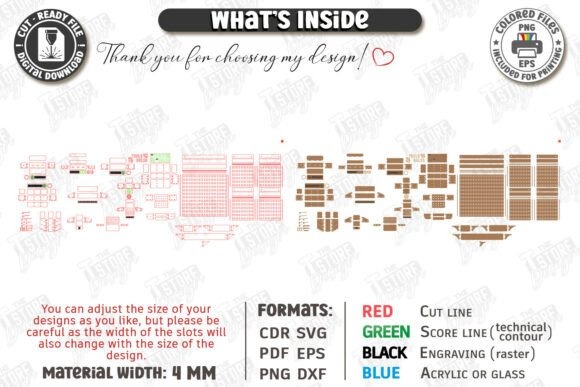
Wall Tool Organizers Laser Cut Bundle is a five-design workshop storage set suited to makers who want frequently used tools visible and accessible without giving up workbench space. The files are designed around a pegboard-style wall organization concept and include SVG, EPS, PNG, PDF, and DXF versions.
The wall-mounted format is the main reason to choose this over a conventional desktop organizer. It makes sense when horizontal workspace is limited or when you want tools to have fixed locations above a bench. The listed design is intended for 4 mm wood, so users working with another sheet thickness should not assume the slots can simply be scaled proportionally without checking the joints.
See Wall Tool Organizers
2. Laser Cut Tool Desk Organiser Craft Box
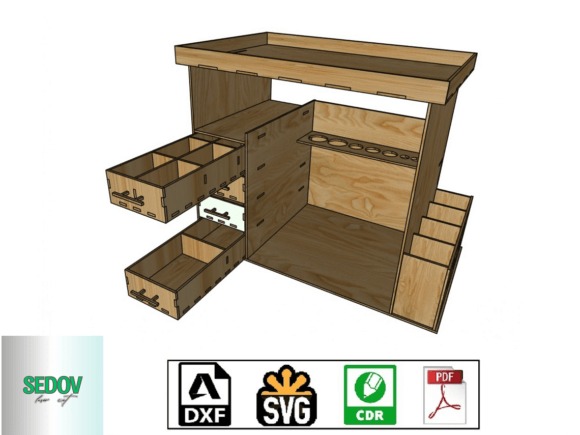
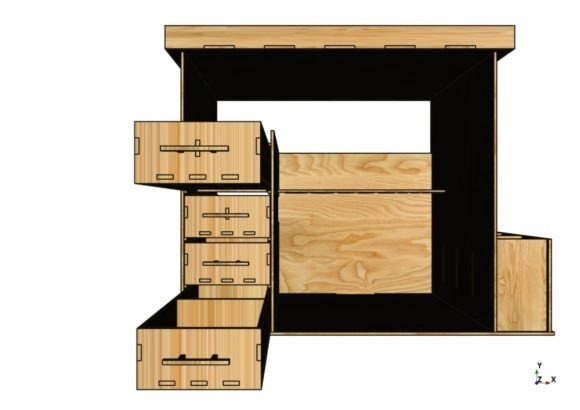
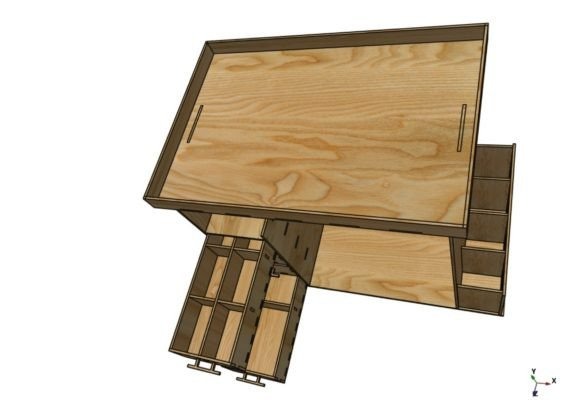
Laser Cut Tool Desk Organiser Craft Box is a large benchtop organizer designed around multiple compartments for tools, craft supplies, and small workshop items. Its listed finished dimensions are approximately 450 × 310 × 410 mm, making it substantially larger than the small desktop holders elsewhere in this roundup.
This is the option to consider when capacity matters more than keeping the build compact. The template is specified for 4 mm material, and the parts are assembled together and fastened with glue. That makes it a more involved project than a simple stand or pencil holder. For smaller collections of screws or components, a divided box may use space more efficiently.
See Tool Desk Organiser
3. Laser Cut Files Box Storage Organizer
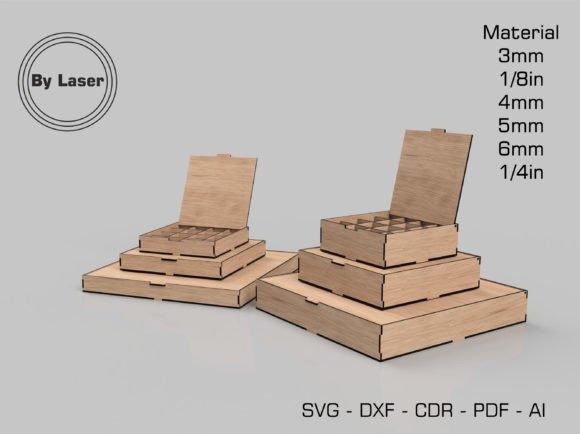
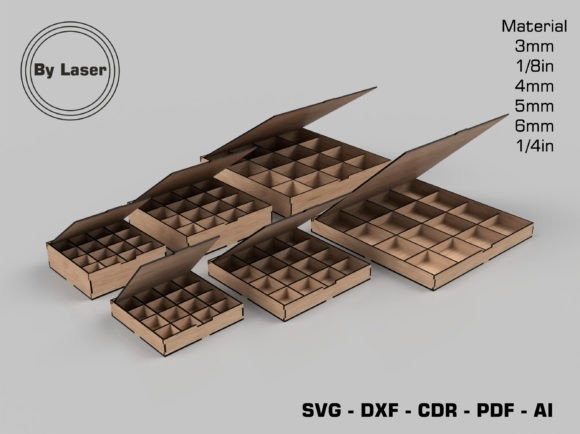
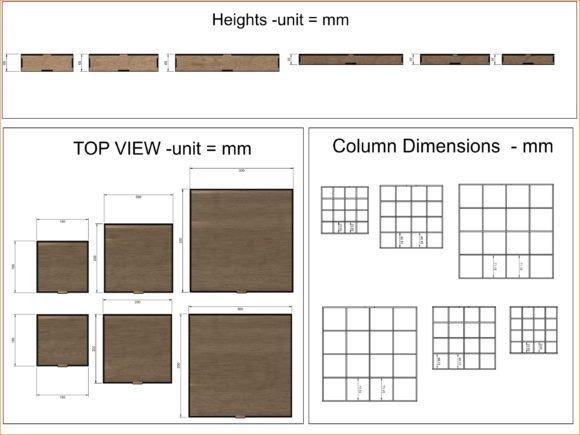
Laser Cut Files Box Storage Organizer is a compartment box system for organizing small parts, craft components, jewelry pieces, hardware, or similar items that are easier to manage when physically separated. The set includes six box sizes, and each box layout contains 16 compartments.
Its strongest advantage is the range of supported dimensions and material-thickness versions, including 3 mm, 1/8 inch, 4 mm, 5 mm, 6 mm, and 1/4 inch. That gives you more flexibility than a file built around one fixed plywood thickness. Choose this when individual compartments matter; the open Tool Desk Organiser makes more sense when you need faster access to larger hand tools.
See Box Storage Organizer
4. Laser Cut Divider Storage Box Organizer
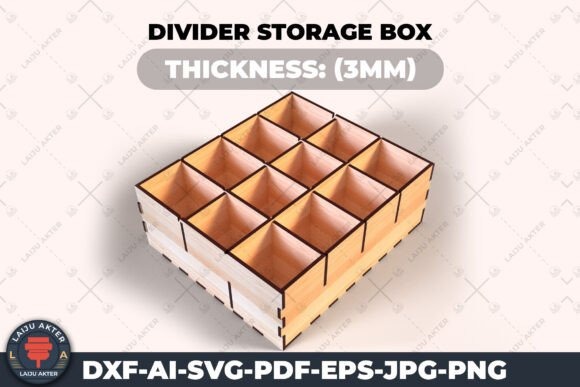
Laser Cut Divider Storage Box Organizer is a compact storage build with adjustable internal dividers, making it suited to supplies whose sizes do not fit one permanent compartment layout. Suggested uses include tools, sewing accessories, craft materials, jewelry, and office essentials.
The adjustable interior is the practical distinction here. A fixed 16-compartment box is useful when you already know you need many similarly sized sections; this design gives you more freedom to change the arrangement. The product page lists a finished size of about 163 × 69 × 188 mm and recommends material from 3 mm to 6 mm, but actual stock thickness should still be checked before committing to the full cut.
See Divider Storage Box
5. Laser Cut Stackable Storage Box Files
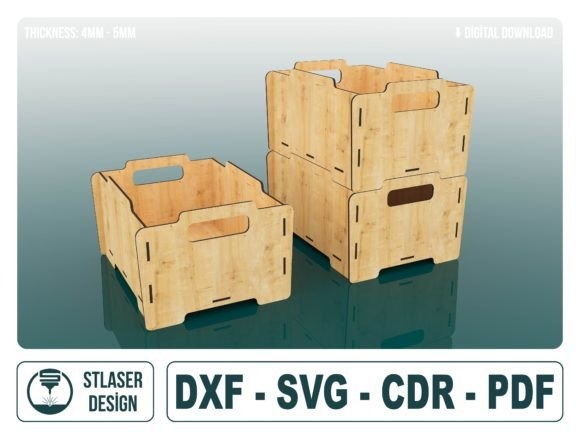
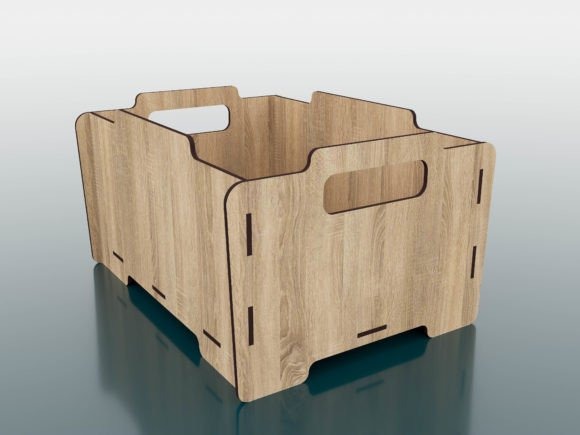
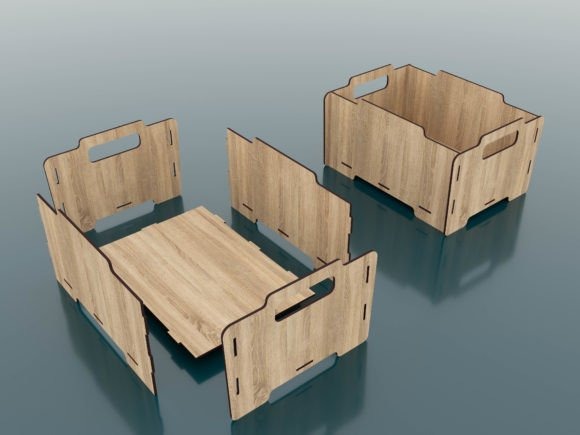
Laser Cut Stackable Storage Box Files is a 4 mm-material storage design for makers who would rather build upward than spread several containers across a shelf or bench. The listed box dimensions are 328 × 225 × 180 mm, giving it significantly more volume than a small parts organizer.
Stackability is the reason to favor this design for supplies that need larger open storage rather than lots of tiny compartments. Multiple units could also create a more consistent storage system than a collection of unrelated boxes. Because the layout is created specifically around 4 mm stock, changing the overall scale is not the same as creating a correct version for another material thickness; slot dimensions need to remain compatible with the sheet being cut.
See Stackable Storage Box
6. Desktop Organizer with Shelf Laser Cut
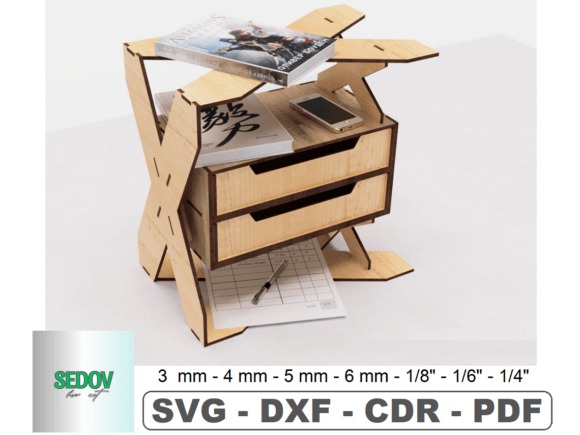
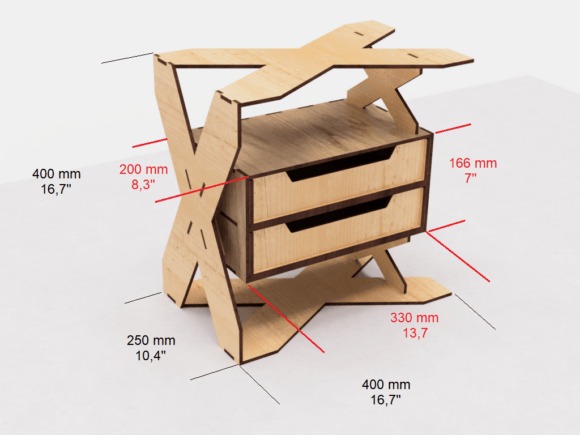
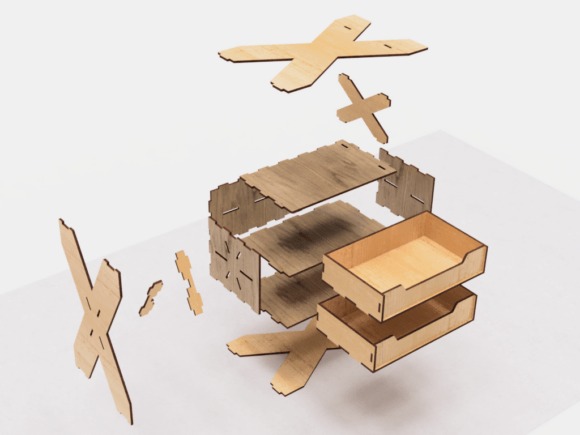
Desktop Organizer with Shelf Laser Cut is a multipurpose shelf-and-organizer design suited to small books, magazines, desk supplies, plants, and other items that benefit from a raised secondary level. It sits between a simple desktop holder and a larger freestanding storage project.
The project is offered for several material thicknesses—3 mm, 4 mm, 5 mm, 6 mm, 1/8 inch, 1/6 inch, and 1/4 inch—which makes matching the file to common sheet stock easier. Consider this when vertical desktop organization is more useful than closed storage. For loose screws or tiny parts that could fall from an open shelf, the compartment organizers above are better matched to the job.
See Desktop Organizer Shelf
7. Laser Cut Floating Wall Shelf Design
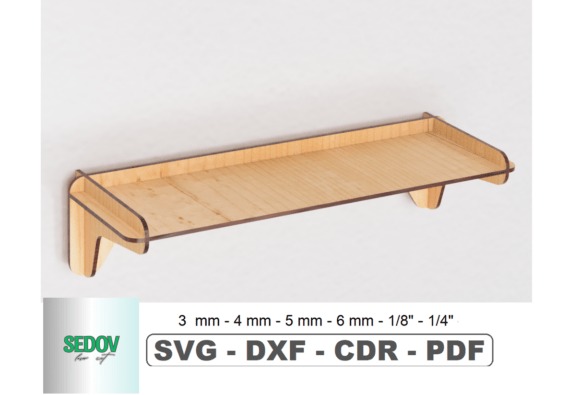
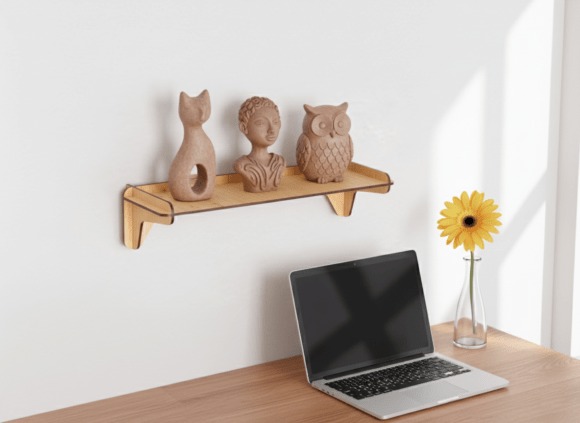
Laser Cut Floating Wall Shelf Design is a compact 300 × 90 mm wall-mounted shelf for small objects, photos, collectibles, plants, or lightweight workshop items. It offers a practical way to use otherwise empty wall space without committing to a large storage cabinet.
The layout is particularly useful when the goal is a small display or utility ledge rather than enclosed organization. Versions are provided for several common thicknesses from 3 mm through 6 mm as well as 1/8- and 1/4-inch material, and the design is described as assembling without glue. A full wall tool system is still the stronger option if your real problem is organizing many workshop tools rather than supporting a few small objects.
See Floating Wall Shelf
8. Phone Stand
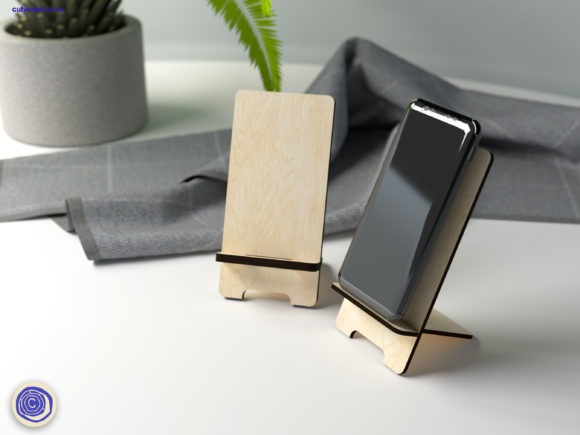
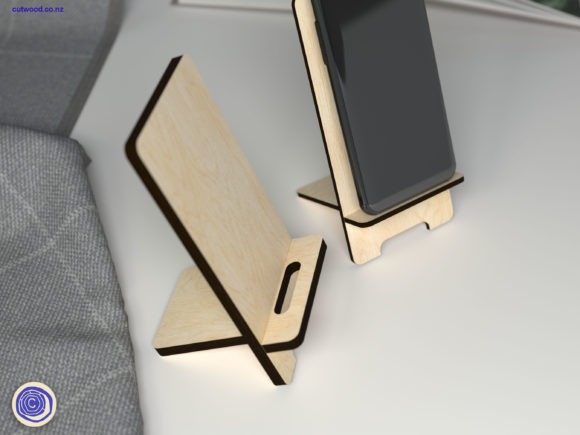
Phone Stand is a compact laser-cut device holder suited to a desk, charging area, kitchen counter, or workshop bench where keeping a phone upright is more convenient than leaving it flat. It is one of the simpler functional builds in the selection and uses only a small amount of material compared with storage furniture or large organizers.
The file stands out for providing versions for 3 mm, 1/8-inch, 4 mm, 6 mm, and 8 mm material. That makes it easier to choose a layout close to the sheet stock already available in your shop. It is a sensible quick project if you want immediate utility; choose one of the organizers instead when the goal is to reduce clutter rather than support one device.
See Phone Stand
9. Laser-cut Laptop Stand Template
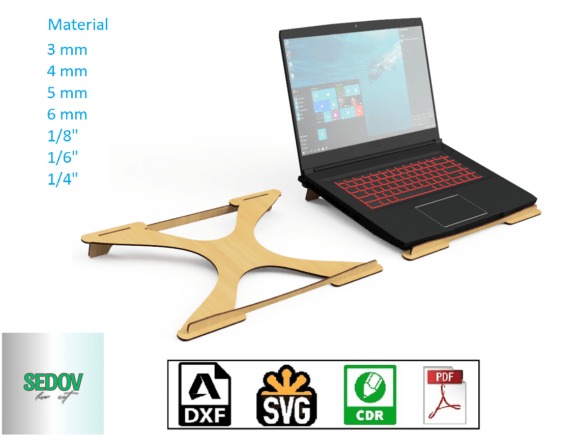
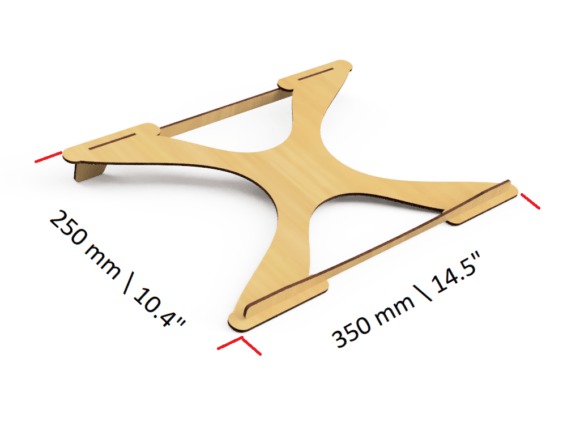
Laser-cut Laptop Stand Template is a device-support project intended to raise a laptop into an angled working position. Compared with the phone holder, it is a larger structural project and needs more attention to fit, rigidity, and the dimensions of the computer that will sit on it.
This project makes sense for a dedicated desk setup where a laser-cut build can replace a separate laptop riser. Before cutting, compare the stand dimensions and contact points with your own laptop rather than assuming every notebook shape will sit the same way. If you mainly use a phone for references while working at the laser, the smaller Phone Stand is a faster and less material-intensive build.
See Laptop Stand Template
10. Home Key Holder Set of 6 Laser Cut Files
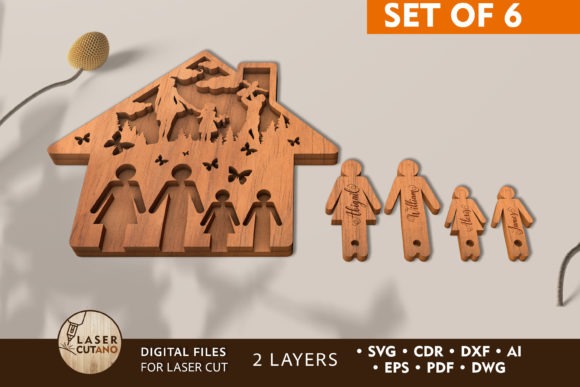
Home Key Holder Set of 6 Laser Cut Files is a group of wall-mounted key organizers designed around a practical entryway task: giving household keys a fixed location. Six layouts are included, with a listed finished size of about 8 × 7 inches and a two-layer construction.
This is more purpose-specific than the shelves and storage boxes, but that narrow purpose can be useful when the recurring problem is misplaced keys rather than general clutter. The product page recommends 3–6 mm wood thickness and lists several possible materials. For workshop tools or larger accessories, however, a key-holder layout is too specialized; the modular wall organizers provide much more useful capacity.
See Home Key Holder Set
Compare the Projects
| Product | Best for | Style / Type | Project Fit |
|---|---|---|---|
| Wall Tool Organizers Laser Cut Bundle | Workshop wall storage | Five-design wall system | Tools and bench accessories |
| Laser Cut Tool Desk Organiser Craft Box | High-capacity bench storage | Large compartment organizer | Tools and craft supplies |
| Laser Cut Files Box Storage Organizer | Small-part separation | 16-compartment boxes | Hardware and components |
| Laser Cut Divider Storage Box Organizer | Flexible compartments | Adjustable-divider box | Mixed small items |
| Laser Cut Stackable Storage Box Files | Vertical storage | Stackable open box | Larger supplies |
| Desktop Organizer with Shelf Laser Cut | Desk organization | Small shelf organizer | Books and desk items |
| Laser Cut Floating Wall Shelf Design | Small wall storage | Floating shelf | Plants, photos, small objects |
| Phone Stand | Quick functional build | Device stand | Phones |
| Laser-cut Laptop Stand Template | Desk device support | Laptop riser | Laptops |
| Home Key Holder Set of 6 Laser Cut Files | Entryway organization | Wall key holder | Household keys |
How to Make Functional Laser Cut Builds Fit Properly
Functional laser cutting is less forgiving than flat decorative work because the parts usually have to fit one another. A slightly incorrect outline on wall art may barely be noticeable; the same dimensional error in a tab, slot, divider, or finger joint can prevent an organizer from assembling correctly.
Measure the sheet instead of trusting the label. Nominal plywood and MDF thickness can differ from the actual measurement. If a design specifies 3 mm stock and your sheet measures 2.8 mm or 3.2 mm, that difference can change how tightly tabs sit in their slots. A caliper is particularly useful before larger builds with dozens of joints.
Run a small fit test before the full sheet. This is especially worthwhile for boxes, organizers, shelves, and stands. Cutting two small pieces with the same slot-and-tab geometry can reveal a poor fit before you spend material on every panel.
Account for kerf. The laser removes a narrow path of material as it cuts. That width varies with the machine, material, focus, and settings, so a joint designed line-for-line may not assemble the way its dimensions suggest on screen. A simple kerf or slot test on the material you actually plan to use gives more useful information than borrowing a compensation value from somebody else’s laser.
Do not resize interlocking projects casually. Scaling a decorative silhouette to 120% usually changes only its overall size. Scaling a box or stand to 120% also changes every slot intended to match material thickness. A 3 mm slot becomes 3.6 mm, even though the plywood is still 3 mm thick. To change the overall dimensions of a structural project correctly, the joint geometry may need to be edited separately.
Think about load and leverage. Small shelves, laptop stands, and wall organizers experience forces that flat signs do not. Material thickness, grain direction in plywood, unsupported spans, joint shape, mounting method, and the weight of the objects all matter. A file being laser-ready does not automatically mean every material or every load is appropriate.
Use the correct operation for each line. Some files distinguish cutting and engraving by line color or layer. Verify those operations in your laser software before starting. Accidentally treating an engraving line as a cut can separate a part that was intended to remain solid.
Common Fit Mistakes to Avoid Before Cutting
- Using nominal material thickness: measure the actual sheet, particularly for tab-and-slot assemblies.
- Skipping a test joint: a small test piece can expose fit problems before a large organizer is cut.
- Ignoring kerf: cut width can affect both loose and overly tight joints.
- Scaling the whole design to change material thickness: this also changes the finished dimensions and usually does not preserve correctly sized joints.
- Changing material without reconsidering the structure: acrylic, MDF, and plywood do not behave identically in assembled projects.
- Cutting every panel before checking the first fit: for unfamiliar files, verify an important joint early whenever the layout allows it.
Which Laser Cut Project Should You Build?
If your workshop problem is a crowded bench, Wall Tool Organizers Laser Cut Bundle moves storage onto the wall and makes more sense than adding another container to the work surface.
If you have many frequently used tools and supplies that need to stay close at hand, Laser Cut Tool Desk Organiser Craft Box provides the largest dedicated bench-storage setup in this selection. For screws, electronic components, beads, or other small pieces, Laser Cut Files Box Storage Organizer offers more useful separation.
If you need one manageable project with everyday utility, Phone Stand is a simpler starting point. For home organization, Home Key Holder Set of 6 Laser Cut Files solves one specific recurring problem without requiring a large amount of material or space.
Whichever project you choose, match the file to the real material thickness and test critical joints before cutting the complete build. For functional laser projects, a few minutes spent verifying fit is usually more valuable than choosing a more complicated design.
Frequently Asked Questions
What are the most useful laser cut projects for a workshop?
Tool organizers, compartment boxes, wall-mounted holders, shelves, and small device stands are among the most practical workshop laser cut projects because they solve recurring storage and access problems. Wall organizers are useful when bench space is limited, while divided boxes make more sense for screws and small components. Choose the project based on what currently creates clutter rather than on appearance alone.
Do I need to measure plywood before cutting an organizer or box?
Yes. Measure the actual plywood, MDF, or acrylic thickness before cutting an interlocking organizer or box. Material sold as a nominal thickness can vary enough to affect tabs, slots, and finger joints. A caliper measurement plus a small test joint can help reveal fit problems before you cut every panel of a larger project.
Can I resize a laser cut box or organizer file?
You can change the dimensions of many vector files, but uniformly scaling an interlocking design also scales its slots and tabs. That can make joints incompatible with the original material thickness. If a structural file was designed for 3 mm stock, changing the overall project size may require editing the joint dimensions separately rather than simply scaling the entire design.
What file formats are useful for laser cut projects?
SVG and DXF are common vector formats for laser cut projects, while some downloads also include AI, EPS, CDR, or PDF files. The useful format depends on the software and workflow used with your machine. Before downloading a design, confirm that the included vector format can be imported correctly into your laser software and check the current product details for any material-specific versions.