



Laser cutting can turn ordinary sheets of plywood, acrylic, and other materials into intricate signs, decorations, and custom projects. But while the laser is busy creating clean edges and detailed patterns, it also generates something less appealing: smoke, airborne particles, and potentially harmful gases.
That’s where laser cutter ventilation comes in.
A proper ventilation system captures contaminated air near the cutting area and removes it from the workspace or passes it through a suitable filtration system. Without effective ventilation, laser cutting can expose people to hazardous fumes, leave residue on equipment, and create unpleasant odors.

Whether you’re setting up your first desktop laser engraver or upgrading a workshop, understanding ventilation is essential. This guide explains how exhaust systems work, what equipment you need, and how to build a safer workspace without making common installation mistakes.
Why Is Laser Cutter Ventilation Important?
Laser cutters work by concentrating energy onto a material until it melts, vaporizes, burns, or breaks down. These processes release airborne contaminants that vary depending on the material, laser settings, and cutting conditions.
Even materials commonly used in crafting can produce hazardous emissions.
Health risks from laser cutting fumes
Laser-generated emissions may contain fine and ultrafine particles, volatile organic compounds (VOCs), and other gases.
For example:
- Wood and plywood: Produce smoke, particles, and gases from heated wood and adhesives.
- Acrylic (PMMA): Can release methyl methacrylate and other decomposition products.
- Leather: May generate irritating fumes, with additional risks from dyes and tanning chemicals.
- Cardboard and paper: Produce smoke, soot, and combustion gases.
- Unknown plastics: May release particularly hazardous compounds and should not be processed without reliable material identification and safety information.
PVC and vinyl-containing materials should not be laser cut because they can release corrosive and toxic hydrogen chloride gas and other hazardous products.
Importantly, the absence of a noticeable smell doesn’t mean the air is safe. Some harmful particles and gases may not be detectable by smell.
Equipment protection and fire safety
Poor ventilation also affects the laser cutter itself. Smoke and residue can settle on lenses, mirrors, rails, and internal components, leading to more frequent cleaning and potentially reduced performance.
An effective exhaust system helps remove airborne contaminants from the enclosure, but it does not eliminate the risk of fire. Never leave an operating laser cutter unattended, and follow the manufacturer’s fire-prevention instructions.
How Does Laser Cutter Ventilation Work?
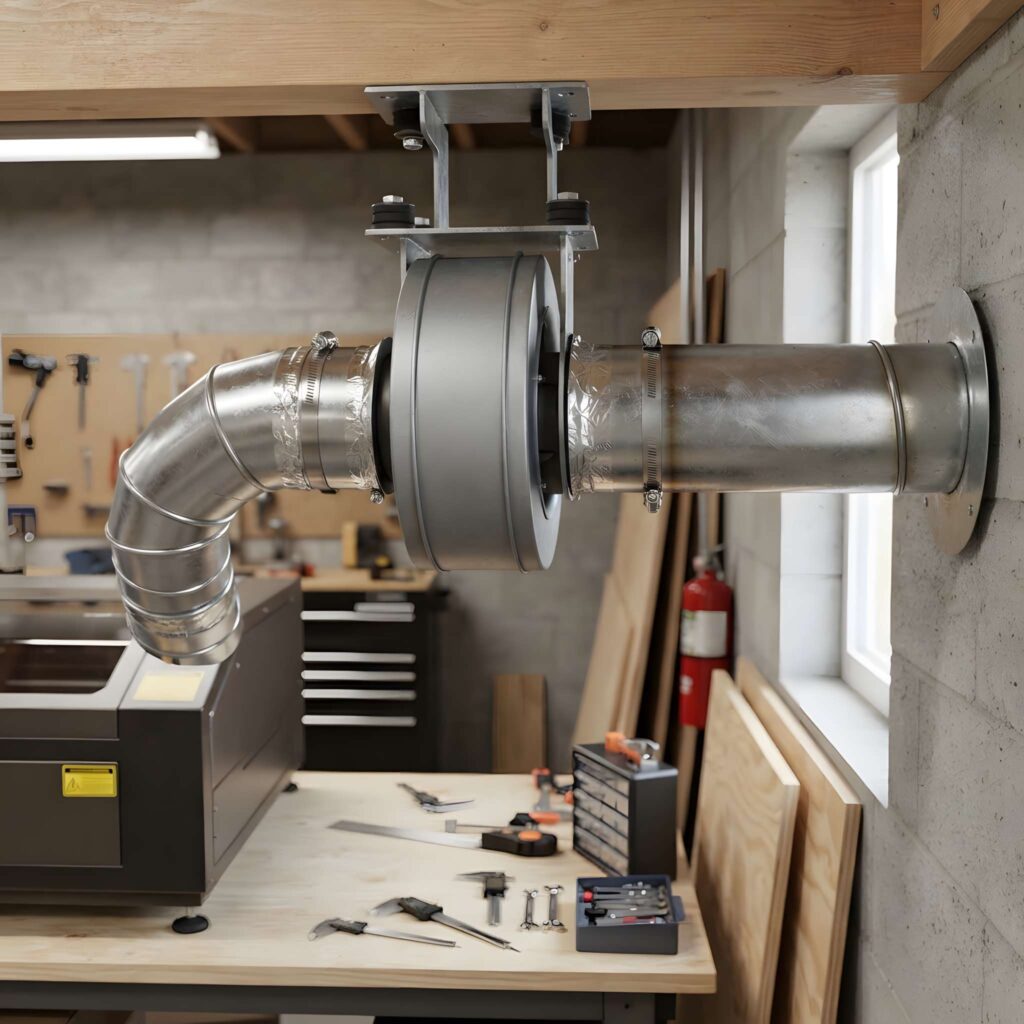
A typical laser cutter ventilation system uses an exhaust fan to draw contaminated air away from the cutting chamber and move it through ducting to a suitable outdoor discharge point.
Illustrative airflow diagram. Actual fan placement and exhaust design depend on the laser manufacturer’s specifications.Скачать JPG
The main components include:
- Laser enclosure: Contains the smoke and fumes so they can be captured.
- Exhaust fan: Creates airflow through the system.
- Ventilation duct: Carries contaminated air toward the discharge or filtration unit.
- Outdoor exhaust outlet: Releases extracted air at an appropriate location away from windows, doors, and air intakes.
- Air filtration unit (optional): Captures particles and certain gases when specifically designed and rated for laser-generated emissions.
A well-designed system maintains sufficient airflow to prevent fumes from escaping into the room. For many enclosed laser cutters, this involves maintaining negative pressure inside the enclosure.
However, a fan that moves a large amount of air in open conditions may perform poorly once connected to long ducts, bends, and filters. Actual airflow under operating conditions matters more than the advertised maximum fan rating.
Types of Laser Cutter Ventilation Systems
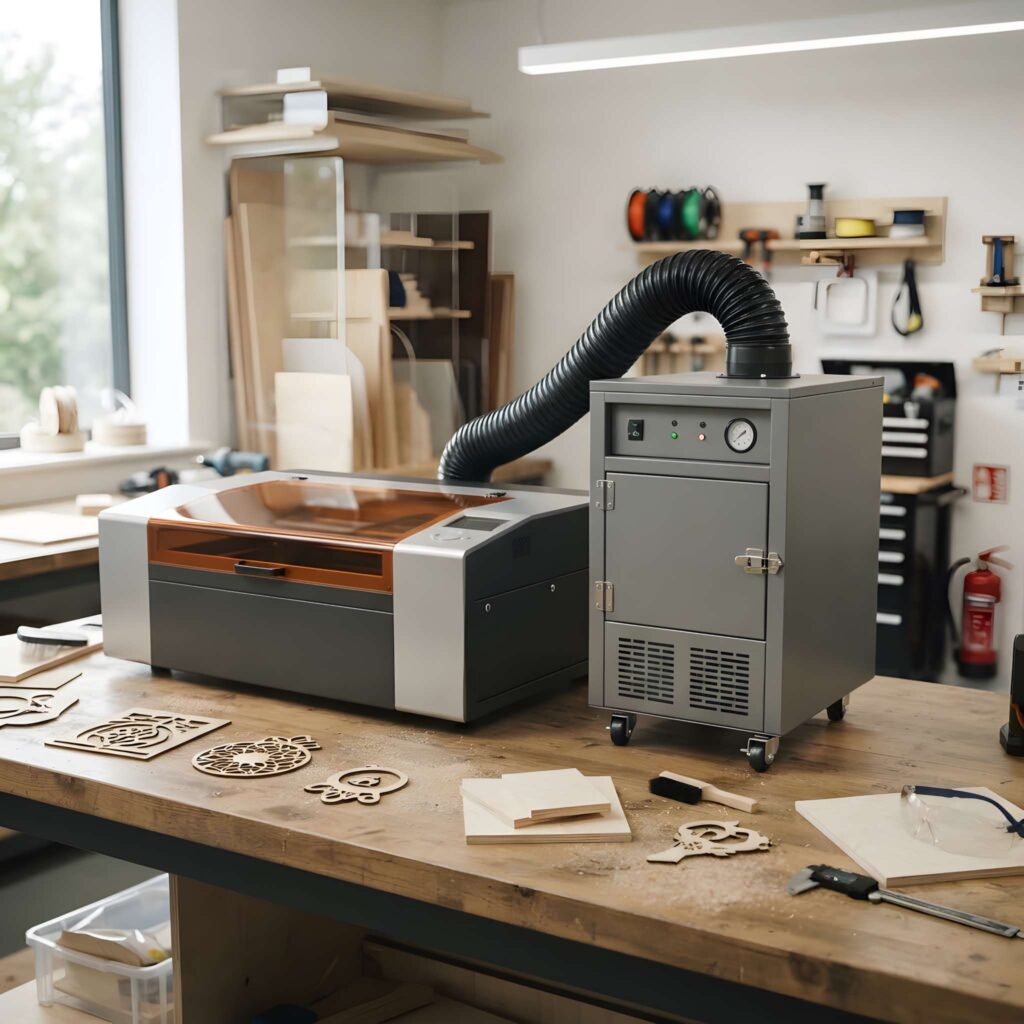
There are three common approaches to managing laser cutting fumes. Each offers different benefits depending on your workspace, machine, and budget.
1. Outdoor exhaust ventilation
Outdoor exhaust is often the preferred solution when a suitable discharge route is available.
The system uses a fan and sealed ducting to transport contaminated air outside the building.
Advantages: Directly removes emissions from the indoor workspace, avoids dependence on recirculating filter performance, and can be relatively straightforward for small machines.
Limitations: Requires a safe exterior outlet, appropriate make-up air, and compliance with building or local exhaust requirements. Exhaust must not re-enter the building or affect neighboring spaces.
2. Filtered fume extraction systems
A dedicated laser fume extractor draws air through a series of filters before discharging it according to its approved configuration.
Typical filter stages include a prefilter for larger particles, a high-efficiency particulate filter, and an activated carbon or other sorbent stage for certain gases.
Not every fume extractor can safely recirculate air indoors. Filter suitability depends on the materials processed, contaminant types, filter capacity, airflow, and manufacturer’s validation.
3. Hybrid exhaust and filtration systems
Some workshops use filtration together with outdoor exhaust.
This arrangement can reduce particulate and odor emissions before the air leaves the building. It may also help where outdoor emissions must be controlled.
The system still needs adequate airflow, correct filter selection, and regular maintenance.
Ventilation system comparison
| System | Main advantage | Main consideration |
|---|---|---|
| Outdoor exhaust | Removes emissions outdoors | Needs suitable outlet |
| Filtered extraction | May support indoor installation | Filter performance and cost |
| Hybrid system | Combines filtration and discharge | More components and maintenance |
For most hobby workshops, properly designed outdoor exhaust is a practical starting point, provided local conditions and manufacturer instructions permit it.
Laser Cutter Ventilation Requirements
There is no single airflow requirement that applies to every laser cutter. A compact enclosed diode machine, a desktop CO2 laser, and a large industrial cutting system have different needs.
How much airflow does a laser cutter need?
Exhaust airflow is commonly expressed in cubic feet per minute (CFM) or cubic meters per hour (m³/h).
Unit conversion only, not a recommended airflow setting. Required airflow must be established for the specific machine and exhaust system.
The correct airflow depends on the enclosure design, exhaust opening, cutting process, duct resistance, and any installed filters.
Begin with the laser manufacturer’s specified airflow and static pressure requirements. If those details are unavailable, seek guidance from the manufacturer or a qualified ventilation professional rather than selecting a fan based on a generic CFM chart.
Choosing the right exhaust fan
An inline centrifugal or mixed-flow fan is often better suited to ducted systems than a basic axial fan, especially when airflow resistance is significant.
Consider the following factors:
- Rated airflow at the system’s expected static pressure
- Compatibility with the exhaust temperature and contaminants
- Noise level and vibration
- Manufacturer-approved installation location
- Electrical safety and continuous-duty rating
- Accessibility for inspection and cleaning
An undersized fan may allow smoke to escape. An incorrectly selected or installed fan can also create leaks or other safety problems.
Choosing ventilation ducting
Ducting should be suitable for the machine and the exhaust conditions.
Smooth, appropriately sized, sealed ducting generally offers lower airflow resistance than long, corrugated flexible hoses.
Avoid unnecessary bends, crushed hoses, undersized adapters, and unsealed connections. Follow the equipment manufacturer’s recommendations for duct material, diameter, length, and routing.
Because laser exhaust can contain hot particles and combustible deposits, use materials appropriate to the fire and temperature risks. Do not assume ordinary household dryer ducting is suitable.
How to Set Up Laser Cutter Ventilation
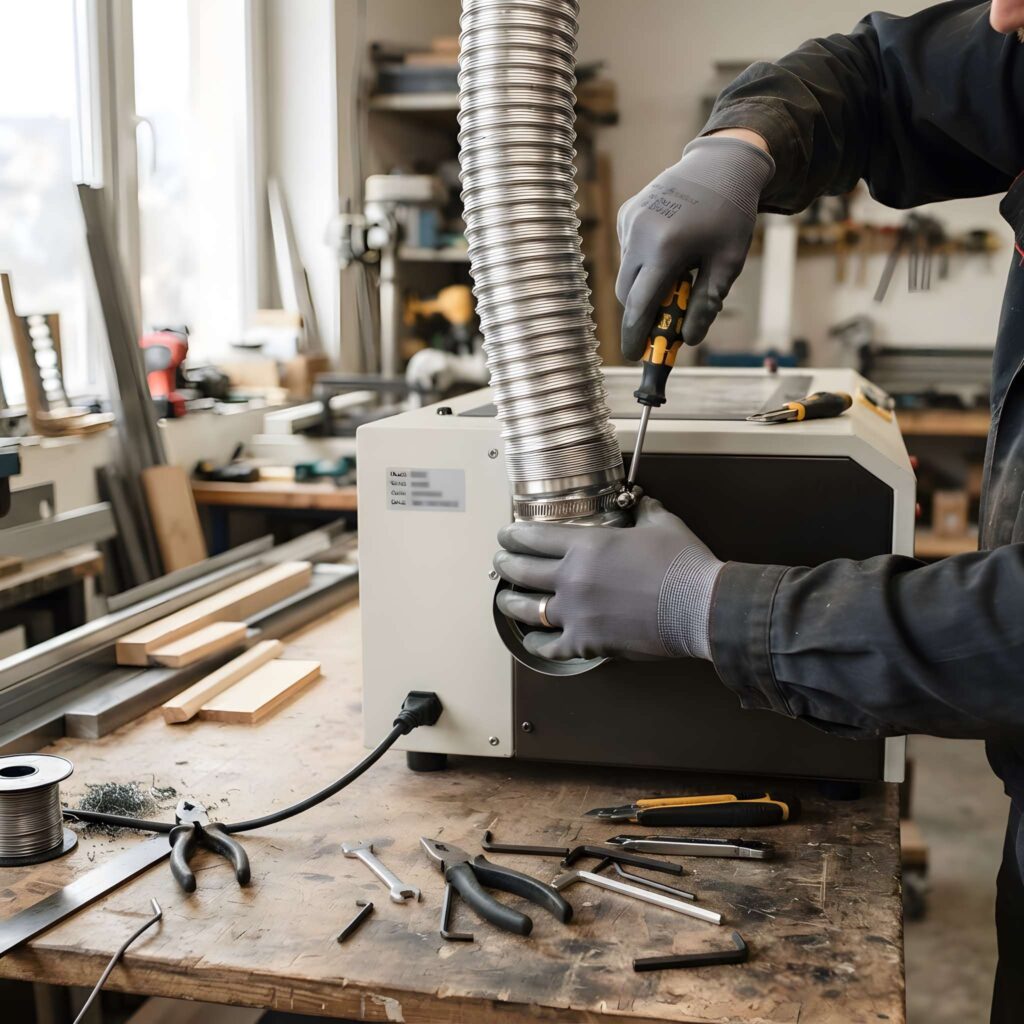
Setting up a laser cutter exhaust system requires more than connecting a hose to a fan. Every component must work together to capture and remove contaminated air.
Step 1: Choose a suitable location
Position your laser cutter where it can connect to an approved outdoor exhaust outlet or compatible extraction system.
Avoid placing the machine near occupied areas, frequently opened doors, or locations where exhaust fumes could return through windows.
If you’re working in an apartment or shared building, check building rules before modifying walls or windows.
Step 2: Install an appropriate enclosure
An enclosure helps contain smoke and directs airflow toward the exhaust connection.
Some CO2 lasers have built-in enclosures, while many open-frame diode lasers require an additional enclosure.
Choose one designed for your machine, with appropriate laser radiation protection, fire-resistant construction, and ventilation connections.
An enclosure should not be treated as a substitute for exhaust ventilation.
Step 3: Connect the exhaust duct
Use compatible ducting between the laser enclosure and the exhaust system.
Keep the duct route as short and direct as practical. Secure connections with suitable fittings and seals.
Avoid sharp bends and restrictions that can significantly reduce airflow.
Step 4: Install the exhaust fan
Select a fan that meets the machine’s airflow requirements at the expected system resistance.
The fan should be installed in the location recommended by the equipment manufacturer. In some arrangements, positioning the fan downstream of the enclosure and ducting helps maintain negative pressure and reduces the chance of contaminated air escaping through upstream leaks.
Step 5: Provide adequate replacement air
Air exhausted outdoors must be replaced by clean air entering the building.
Without adequate make-up air, the exhaust fan may struggle to maintain airflow. Excessive building depressurization can also interfere with fuel-burning appliances and potentially cause dangerous backdrafting.
A ventilation professional can assess these risks when necessary.
Step 6: Test the system before cutting
Before operating the laser, check that the fan runs correctly, the ducting is secure, and the airflow follows the intended path.
Look for visible smoke escaping the enclosure during approved commissioning tests, but don’t use odor or visual inspection as the only evidence of safety.
Airflow measurement and, where necessary, exposure testing provide more reliable confirmation. OSHA’s ventilation guidance emphasizes proper system design, airflow verification, and maintenance.
Ventilation for Different Types of Laser Cutters
Ventilation needs also depend on the machine’s laser technology and the materials being processed.
Diode laser ventilation
Diode lasers are popular for hobby projects, wood engraving, and small-scale crafting.
Many are sold as open-frame machines, making an appropriate protective enclosure particularly important.
A suitable enclosure combined with effective extraction helps control fumes, but the ventilation system must also be compatible with the machine’s cooling and safety requirements.
CO2 laser ventilation
CO2 laser cutters are commonly used for cutting acrylic, plywood, cardboard, and other nonmetallic materials.
Because these machines can remove substantial amounts of material quickly, effective smoke extraction is essential.
Follow the manufacturer’s specifications for airflow, duct size, and exhaust arrangements. Keep the exhaust system running for the recommended clearing period after cutting finishes.
Fiber laser ventilation
Fiber lasers are often used for marking or cutting metals, depending on their power and design.
Metal processing can generate fine particles and potentially hazardous fumes, especially when working with coatings, alloys, or treated surfaces.
Industrial fiber laser installations may require specialized dust collectors, spark protection, and fire or explosion risk controls.
These systems should be designed around the specific materials and industrial process rather than using hobby-grade ventilation equipment.
Common Laser Cutter Ventilation Mistakes
Even a well-equipped workshop can have ventilation problems when the system is poorly configured.
| Mistake | Why it’s a problem | Better approach |
|---|---|---|
| Using a small desk fan | Spreads fumes around the room | Capture emissions at the source |
| Choosing a fan by free-air CFM alone | Ignores duct and filter resistance | Check the fan performance curve |
| Using long flexible ducting | Increases airflow resistance | Use suitable smooth ducting |
| Venting near an open window | Allows fumes to re-enter | Select a safe discharge location |
| Relying on activated carbon alone | Doesn’t adequately capture particles | Use validated multistage filtration |
| Ignoring filter maintenance | Reduces extraction performance | Follow the filter replacement schedule |
| Cutting unidentified plastics | May release hazardous gases | Verify material composition first |
One particularly common mistake is assuming that a regular household air purifier can replace a dedicated fume extraction system.
Most household purifiers aren’t designed to capture emissions directly from a laser cutter or handle the full range of gases produced by thermal decomposition.
A portable room purifier may provide supplementary air cleaning, but it should not replace properly engineered source capture.
Laser Cutter Ventilation Maintenance
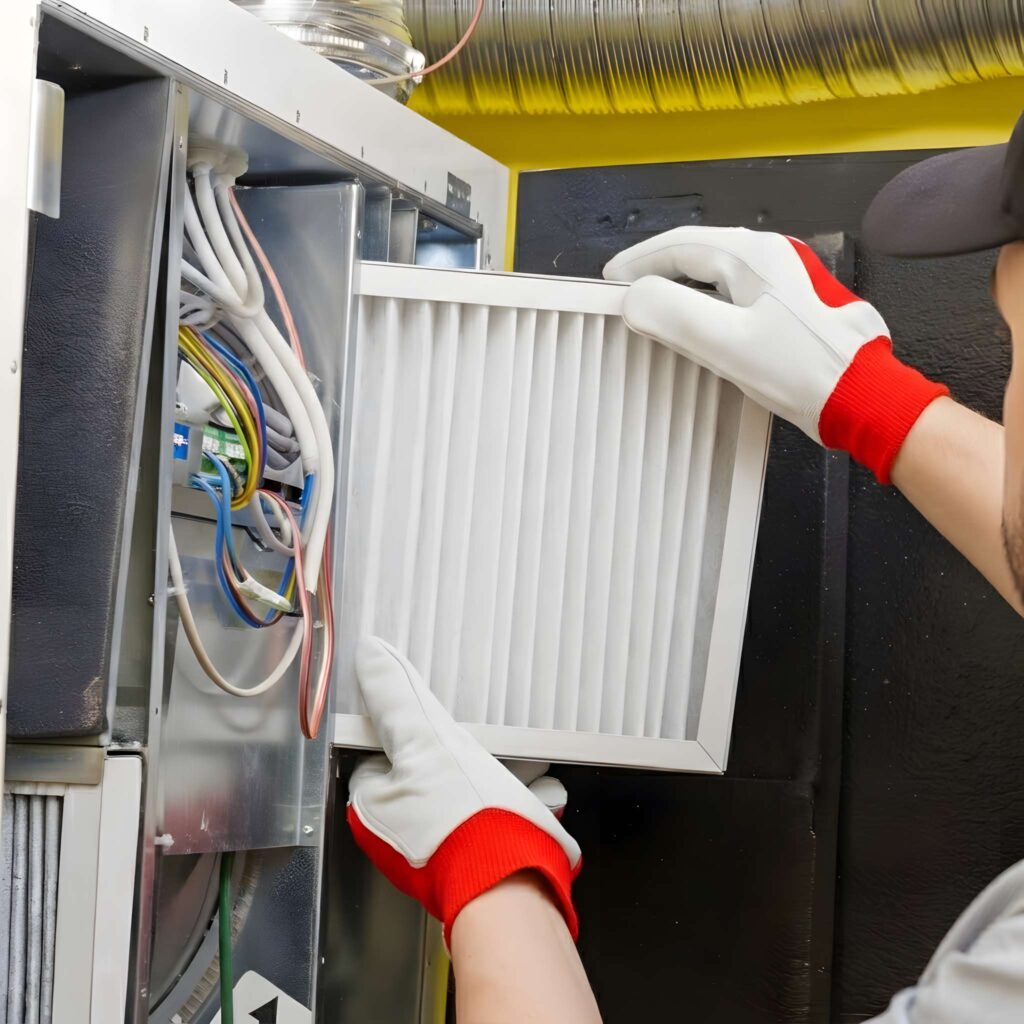
Ventilation systems need regular inspection to maintain effective airflow.
Before each cutting session, check that the exhaust fan operates normally, the ducting is connected, and the enclosure is intact.
Periodically inspect the ducting for residue buildup, leaks, damage, and obstructions. Follow the manufacturer’s instructions for cleaning and replacement.
For filtered systems, monitor filter condition and any pressure-drop or saturation indicators provided by the manufacturer.
Activated carbon filters may lose their ability to capture gases before a noticeable airflow reduction occurs. A filter that still allows air to pass is not necessarily effective.
Record maintenance and airflow checks if the machine is used commercially or frequently.
How Much Does Laser Cutter Ventilation Cost?
The total cost depends on whether your machine already has an enclosure, how far exhaust must travel, and whether you need filtration.
A simple outdoor exhaust installation generally has fewer components than a sophisticated recirculating fume extraction system.
Budget for the entire installation rather than just the fan. This includes suitable ducting, connectors, mounting hardware, exterior vent components, replacement air provisions, and any professional installation work.
Filtered extraction systems may have higher ongoing costs because particulate and gas filters require periodic replacement.
The cheapest initial system isn’t necessarily the most economical if it performs poorly, needs frequent repairs, or requires expensive modifications.
Final Thoughts
Laser cutter ventilation is an essential part of a safe and reliable laser cutting setup. Whether you’re engraving wooden ornaments or producing detailed acrylic signs, controlling fumes and particles should be a priority from the beginning.
For many small workshops, an enclosed laser cutter connected to a properly designed outdoor exhaust system is a practical solution. Where outdoor discharge isn’t feasible, a validated fume extraction system may be an alternative.
Choose ventilation equipment based on your specific machine and materials, verify that it performs correctly, and maintain it regularly.
Good ventilation helps protect your workspace and equipment while allowing you to focus on creating laser-cut projects.

Frequently Asked Questions About Laser Cutter Ventilation
1. Do all laser cutters need ventilation?
Yes. Laser cutting and engraving processes that generate fumes or particles require appropriate emission control. Even small desktop lasers can release hazardous airborne contaminants. Research on desktop laser cutters has identified respirable particles, ultrafine particles, and gaseous emissions from commonly processed materials.
2. Can I use a laser cutter indoors?
Yes, but only with appropriate laser safety controls and an effective ventilation or extraction system designed for the machine and materials. An indoor installation must prevent hazardous exposure to occupants and comply with applicable requirements.
3. Can I vent a laser cutter through a window?
A window exhaust arrangement may be possible, but it must provide a secure, sealed, and appropriately located discharge. A hose loosely placed through an open window is not a reliable solution. Consider re-entry of fumes, neighboring windows, weather, building requirements, and make-up air.
4. Is a carbon filter enough for laser cutting fumes?
No, not by itself. Activated carbon can adsorb certain gases and odors, but it does not provide comprehensive particulate filtration and may not remove all hazardous gases. A suitable extraction system typically needs multiple treatment stages and performance validation for the specific contaminants.
5. Do I need a ventilation system for laser engraving wood?
Yes. Wood engraving produces smoke and airborne contaminants even when the laser only removes a shallow surface layer. Use effective source capture and follow the laser manufacturer’s ventilation instructions.
6. How do I know if my laser cutter ventilation is working?
Check the fan, duct connections, filter condition, and airflow performance. Visible smoke escaping the enclosure indicates a problem, but the absence of smoke or odor doesn’t prove that exposure is controlled. For reliable verification, use appropriate airflow measurements and professional assessment when necessary.
7. Can I use a bathroom exhaust fan for my laser cutter?
A typical bathroom exhaust fan should not be assumed suitable. These fans may lack the required static pressure performance, material compatibility, and protection against hot particles or contaminated deposits. Choose equipment specifically approved or properly engineered for the intended exhaust application.
8. Should laser cutter ventilation run after the job finishes?
Yes, where recommended by the manufacturer. Continuing extraction for an appropriate clearing period helps remove residual airborne contaminants before opening the enclosure. The necessary duration depends on the machine, airflow, and materials. Follow the manufacturer’s instructions rather than relying on a universal timer.