

Choosing the right wood can make the difference between clean, precise laser cuts and frustrating results filled with scorch marks, uneven edges, or incomplete cuts. Whether you’re making wooden ornaments, intricate wall art, personalized gifts, or products to sell, the material you choose matters just as much as your laser cutter.
Basswood, laser-grade birch plywood, and poplar plywood are among the best woods for laser cutting. Basswood is especially suitable for beginners and detailed designs, birch plywood offers strength and versatility, and poplar plywood is lightweight and relatively easy to cut. The ideal choice depends on your machine, wood thickness, project requirements, and material quality.

In this guide, we’ll compare popular wood types, explain which materials work best for different laser-cutting projects, and share practical tips for achieving cleaner results.
Best Wood for Laser Cutting at a Glance
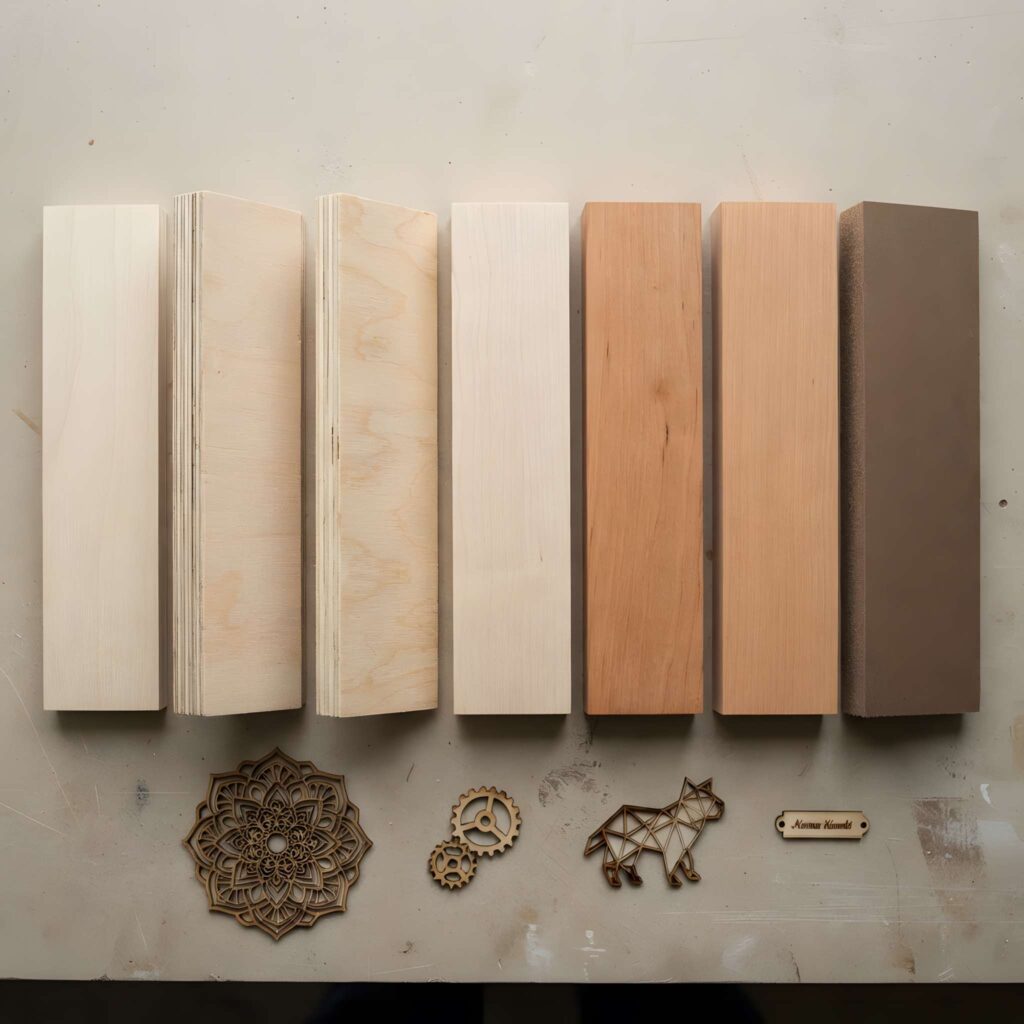
Not all wood behaves the same way under a laser beam. Density, moisture, grain patterns, glue, and thickness all affect how easily a material cuts.
Here’s a quick comparison of popular options.
| Wood Type | Cutting Ease | Best For | Main Consideration |
|---|---|---|---|
| Basswood | Excellent | Detailed crafts, ornaments | Soft and easy to dent |
| Birch plywood | Good | Signs, boxes, layered art | Glue and internal voids |
| Poplar plywood | Very good | Lightweight crafts | Variable panel quality |
| Maple | Moderate | Premium gifts, engraving | Dense hardwood |
| Cherry | Moderate | Decorative products | Higher cost |
| Alder | Good | Signs and engraved gifts | Limited availability |
| Laser-rated MDF | Moderate | Painted designs, prototypes | Smoke and binder emissions |
Cutting ease is a general comparison, not a guaranteed performance rating. Actual results depend on the laser type, power, thickness, and material construction.
7 Best Types of Wood for Laser Cutting
1. Basswood – Best Overall for Beginners
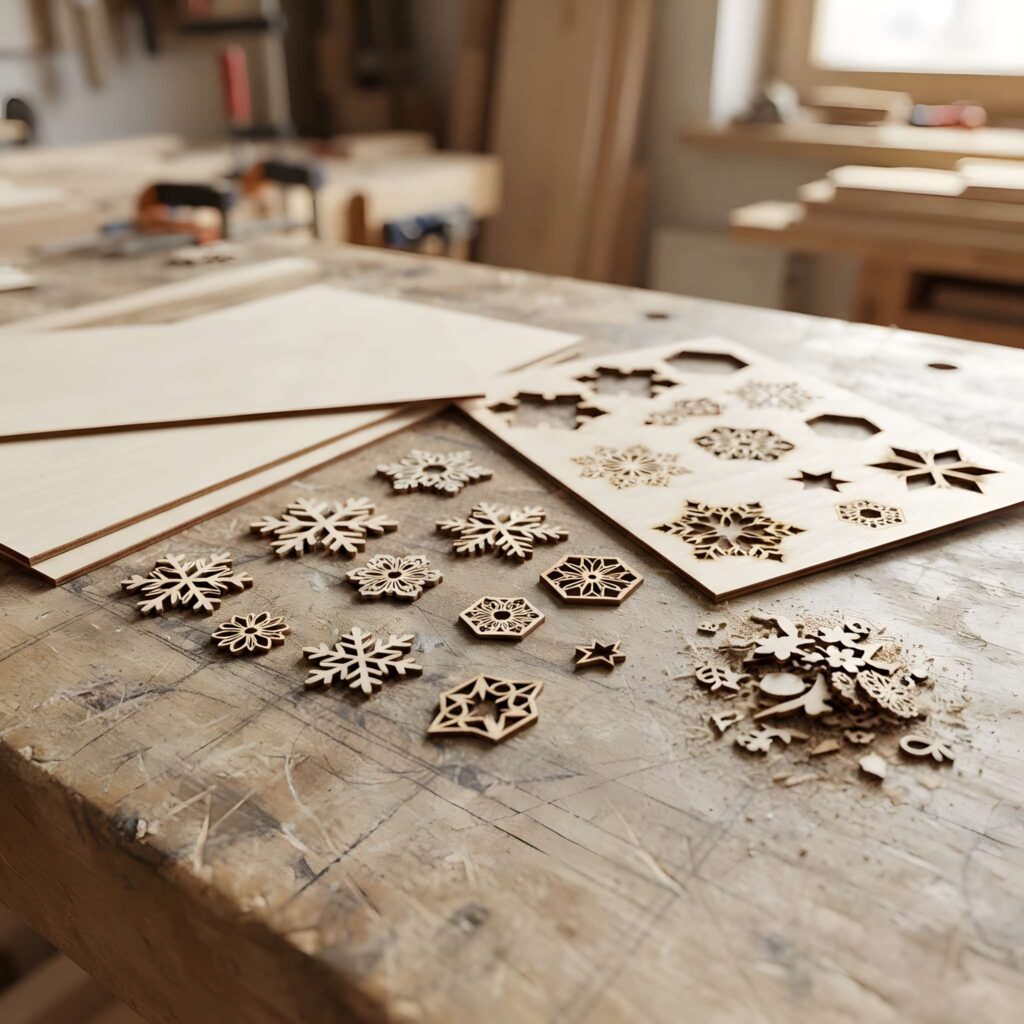
Basswood is one of the most beginner-friendly materials for laser cutting. Its relatively low density, fine grain, and consistent texture make it a popular choice for detailed projects.
Unlike harder woods, basswood generally requires less cutting energy, which can help reduce charring when settings are properly adjusted.
Why choose basswood?
- Fine, uniform grain supports intricate shapes.
- Light color makes engraved details easy to see.
- Relatively soft material cuts more easily than dense hardwoods.
- Available in thin craft sheets suitable for many hobby lasers.
Basswood works particularly well for Christmas ornaments, miniature models, earrings, decorative lettering, and layered artwork.
However, its softness also makes it easier to dent or break, particularly in thin, delicate sections.
Best for: Beginners, detailed designs, lightweight decorations, and hobby projects.
2. Birch Plywood – Best for Versatile Projects
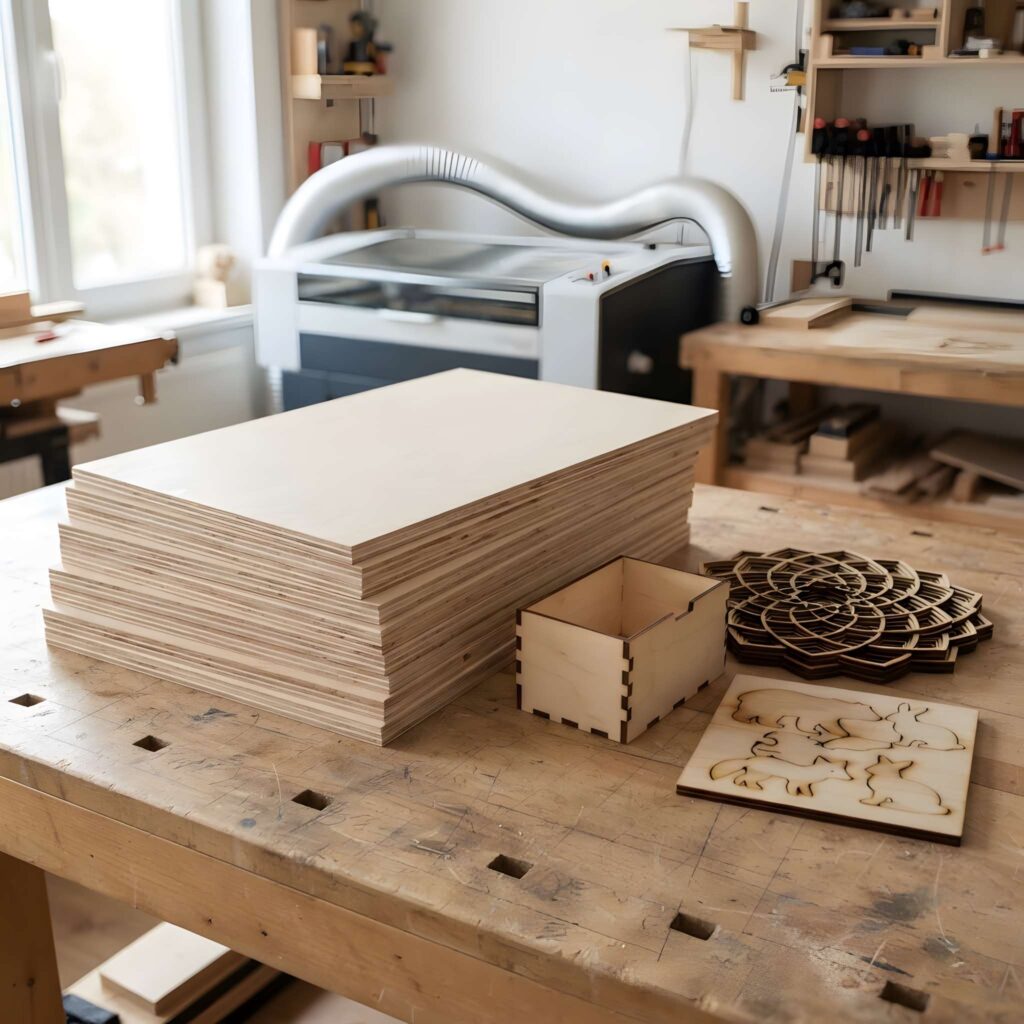
Birch plywood is a popular choice for laser-cutting projects that require a combination of strength, appearance, and dimensional stability.
Its cross-laminated layers make it useful for boxes, signs, puzzles, and decorative panels.
However, plywood quality varies significantly. Some sheets contain internal gaps, dense glue lines, or inconsistent cores that interfere with laser cutting.
For the best results, look for laser-grade birch plywood with a consistent core and adhesive specifically identified as suitable for laser processing.
Birch plywood is a strong choice for wooden gift boxes, layered wall art, engraved signs, puzzles, and small organizers.
Best for: Structural crafts, home decor, signs, and products intended for sale.
3. Poplar Plywood – Best for Lightweight Projects
Poplar plywood offers a useful balance of low weight, workability, and cost.
Its relatively light-colored surface is suitable for engraving and painting, while its lower-density core can make it easier to cut than some hardwood plywood products.
Poplar plywood is particularly useful for projects where the finished product needs to be lightweight.
Popular applications include hanging decorations, wall signs, educational toys, craft kits, and painted ornaments.
Keep in mind that the outer veneers and adhesives affect the final cutting performance. Two poplar plywood sheets of the same thickness may require different settings.
Best for: Lightweight decorations, painted crafts, and repeated production of simple shapes.
4. Maple – Best for Premium Engraved Products
Maple is a dense hardwood known for its smooth texture, light appearance, and durability.
Although it generally requires more laser energy than basswood, it can produce attractive engraved details and premium-looking finished products.
Maple is particularly useful for personalized gifts, decorative plaques, coasters, and engraved keepsakes.
Because of its density, cutting thick maple can be slow and may create more edge discoloration. Thin maple veneer or solid sheets are more practical for many hobby machines.
Best for: Premium gifts, engraved decorations, and durable decorative items.
5. Cherry – Best for Decorative Laser-Cut Gifts
Cherry wood is valued for its warm reddish-brown appearance and fine grain.
It can produce attractive results in decorative projects, especially when the natural wood color is part of the design.
Cherry is generally more expensive than basswood and many craft plywood products. It also requires careful testing to balance cut completion and edge charring.
Cherry is an appealing choice for jewelry, personalized nameplates, premium ornaments, and decorative inlays.
Best for: Higher-end decorative crafts and personalized gifts.
6. Alder – Best for Engraved Signs and Keepsakes
Alder is a relatively soft hardwood with a consistent grain pattern.
It is commonly used for laser engraving because it can produce visible contrast between engraved areas and the surrounding surface.
Thin alder can also be laser cut, although availability and sheet quality vary by supplier.
Its natural appearance makes it suitable for rustic signs, commemorative plaques, and personalized wooden gifts.
Best for: Engraved signs, rustic decorations, and custom keepsakes.
7. Laser-Rated MDF – Best for Painted Projects
Medium-density fiberboard, commonly called MDF, is an engineered wood product made from wood fibers and binders.
Its uniform structure provides a smooth surface without natural grain or knots. This makes it useful for painted decorations and prototypes.
However, MDF can generate substantial smoke and potentially harmful emissions during laser processing, depending on its binder formulation.
Only use MDF that the manufacturer specifically approves for your laser system, with suitable extraction and filtration. Do not assume ordinary construction-grade MDF is safe to laser cut.
Best for: Painted shapes and prototypes when the specific MDF product is approved for laser cutting.
What Is the Best Plywood for Laser Cutting?
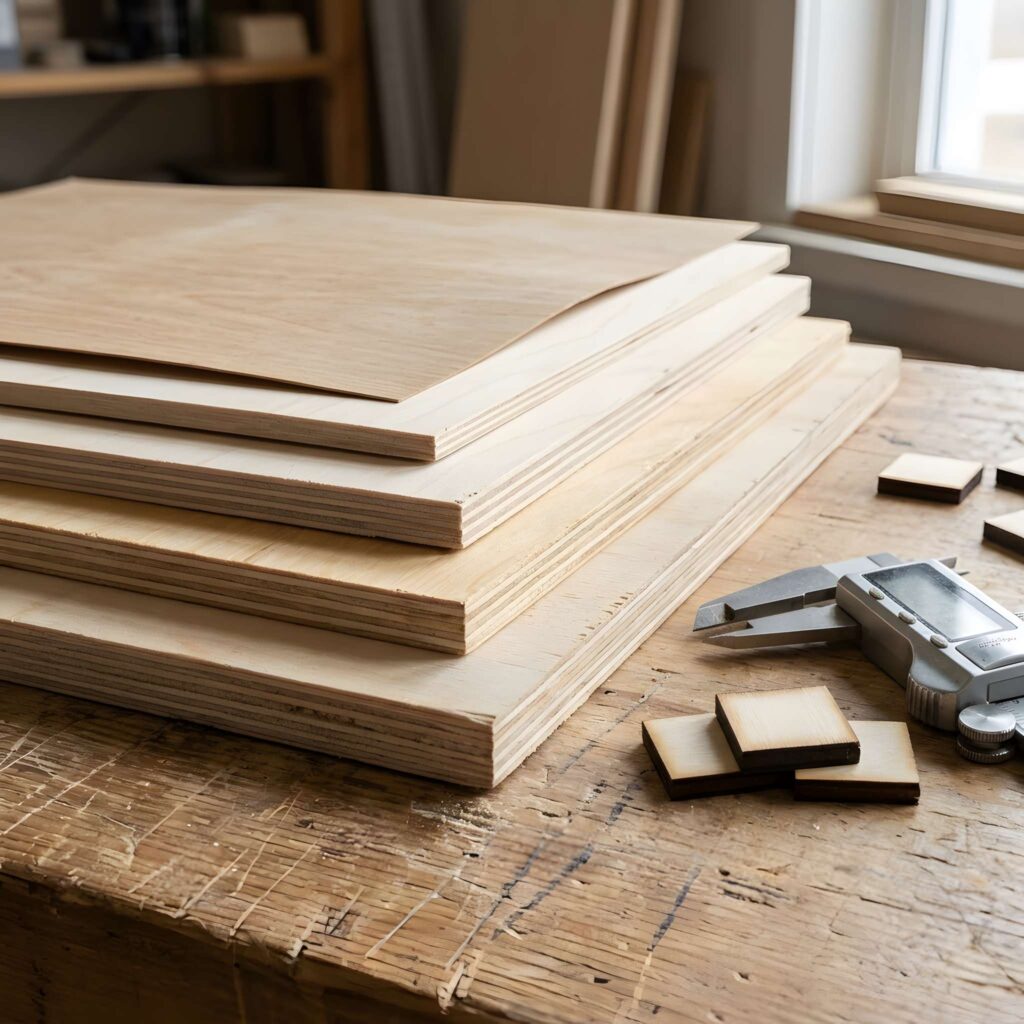
For many projects, laser-grade birch plywood is an excellent all-around option. Poplar-core laser plywood is also worth considering when easy cutting and low weight are priorities.
The most important factor is not simply the species of wood. It’s the quality of the plywood construction.
Good laser-cutting plywood should have consistent thickness, minimal internal voids, flat surfaces, and adhesives approved for laser processing.
Ordinary hardware-store plywood can contain hidden defects that cause sections to remain uncut even when the rest of the design separates cleanly.
Baltic Birch vs Regular Birch Plywood
Baltic birch plywood is known for its multiple thin veneer layers and relatively consistent construction. However, the term does not guarantee laser compatibility.
Regular birch-faced plywood may contain different core materials and adhesives.
For laser cutting, a verified laser-grade panel can be a better choice than an unidentified sheet marketed only as Baltic birch.
Buying tip: Purchase a small sample before ordering large quantities. A test cut will reveal more about real-world performance than the wood species alone.
What Wood Thickness Is Best for Laser Cutting?
Wood thickness affects cutting speed, edge quality, and the amount of laser energy required.
Thinner sheets are generally easier to cut, making them a practical starting point for beginners.
| Thickness | Common Applications | General Suitability |
|---|---|---|
| 1–2 mm | Fine details, veneer, miniature crafts | Good for delicate projects |
| 3 mm (1/8 inch nominal) | Ornaments, signs, layered art | Popular starting thickness |
| 4–6 mm | Boxes, puzzles, decorative panels | Requires more cutting capability |
| 8–10 mm | Thicker components and signs | More demanding; often CO₂ territory |
| Over 10 mm | Specialized thick projects | Highly machine-dependent |
These are general project categories, not guaranteed cutting capabilities.
Best Wood for Diode Laser Cutters
For lower-powered diode lasers, thin basswood and verified laser-grade poplar plywood are sensible starting materials.
A 3 mm sheet may be practical for some machines, but cutting capability varies significantly with optical output power, wavelength, focus, air assist, and the material itself.
Dark or charred surfaces may absorb diode laser light differently from pale wood. Published machine specifications and material test results should guide your selection.
Best Wood for CO₂ Laser Cutters
CO₂ laser cutters are commonly used for cutting wood and plywood because their wavelength is strongly absorbed by many organic materials.
They can handle a wider range of thicknesses, depending on machine power and optics.
Laser-grade birch plywood, basswood, poplar plywood, and selected hardwoods are all potential options.
Always verify the machine’s actual capability rather than relying solely on its advertised wattage.
What Wood Should You Avoid Laser Cutting?
Some materials are unsuitable because they produce dangerous emissions, cut inconsistently, or create excessive fire risk.
Avoid processing unknown or unidentified sheet goods. In particular, be cautious with pressure-treated wood, painted or coated wood of unknown composition, and engineered boards without documented laser compatibility.
Wood containing excessive resin, hidden metal fasteners, or unsuitable adhesives can also cause problems.
Never laser cut PVC or vinyl-containing laminates. They can release corrosive and hazardous gases.
Even untreated natural wood produces smoke, fine particles, and potentially harmful gases when laser cut. A suitable enclosed machine, effective exhaust system, and appropriate filtration are essential.
Important: Never leave an operating laser cutter unattended. Wood is combustible, and a stalled cut or flare-up can develop into a fire.
How to Choose the Right Wood for Laser Cutting
Before purchasing wood for your laser cutter, consider the following factors.
Wood Density and Grain
Low-density wood usually cuts more easily than dense hardwood. A fine, uniform grain also helps produce consistent results.
For intricate designs, basswood and poplar are useful starting points. For stronger finished products, consider birch plywood.
Laser manufacturer Trotec confirms that wood density, resin content, and grain consistency affect laser processing performance.
Glue and Material Construction
For plywood, adhesive composition is especially important.
Choose sheets sold specifically for laser cutting, and check that the manufacturer provides information about material compatibility.
Even attractive plywood may cut poorly if its glue lines are unusually resistant to the laser.
Moisture Content and Flatness
Wood should be dry, flat, and reasonably consistent in thickness.
Warped sheets can move out of focus, causing uneven cutting. Excess moisture may also affect cutting performance.
Store wood flat in a dry environment, and allow new material to acclimate to your workshop before use.
Cost and Availability
If you’re making products in quantity, calculate the cost per usable finished piece rather than simply comparing sheet prices.
An inexpensive sheet that requires repeated cutting, extra cleaning, or frequent replacement may cost more over time than higher-quality laser plywood.
Tips for Getting Cleaner Laser Cuts on Wood
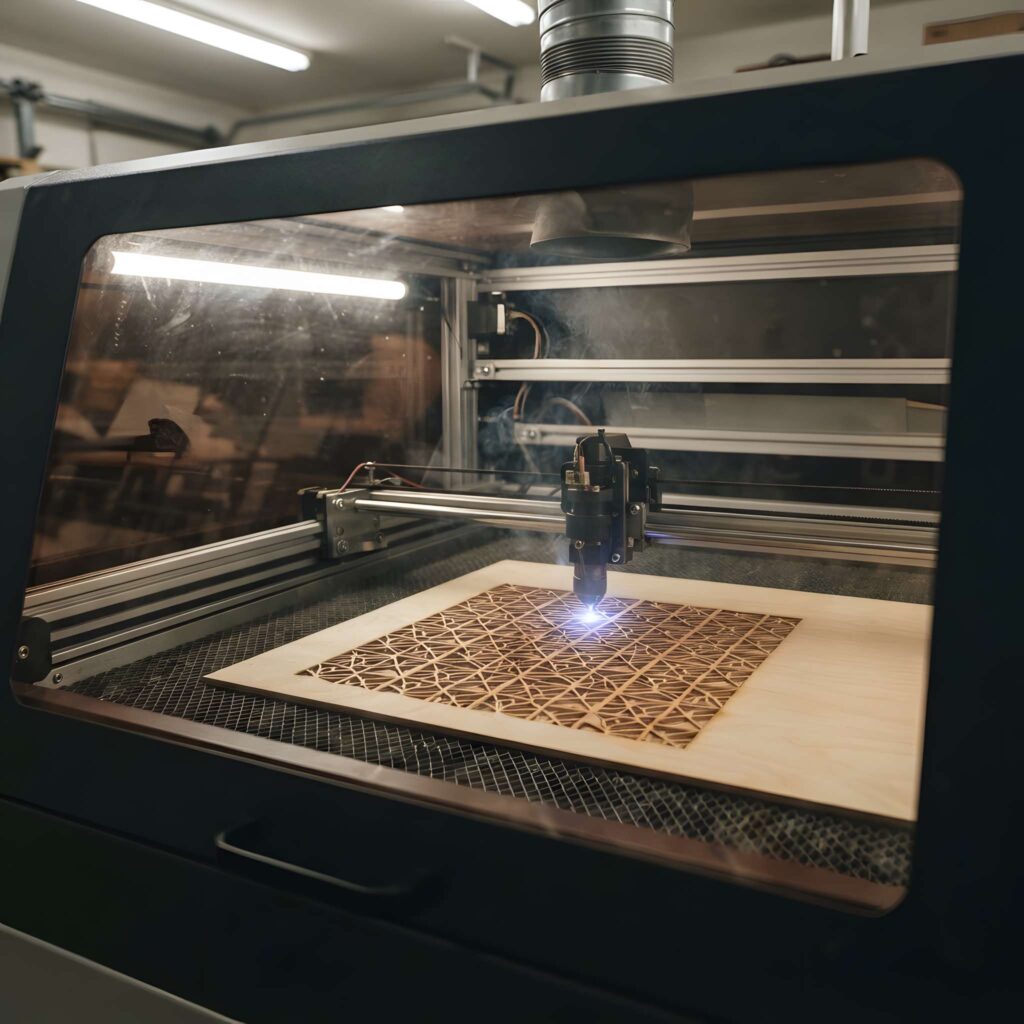
Even the best wood for laser cutting can produce disappointing results when machine settings or preparation are incorrect.
1. Start With a Material Test
Create a small test grid using different speed and power combinations appropriate for your machine.
Evaluate whether the cut passes completely through the material, how much charring appears, and whether fine details remain intact.
Save successful settings for each material and thickness.
2. Use Proper Air Assist
Air assist helps move smoke and debris away from the cutting area and can reduce flaming and edge discoloration.
Use the airflow recommended by your laser manufacturer.
3. Keep the Wood Properly Focused
Incorrect focus can create wider kerfs, inconsistent cuts, and excessive scorching.
Check the material height and focus before beginning a project, especially when switching between wood thicknesses.
4. Use Masking When Appropriate
Laser-compatible paper masking can help protect the top surface from smoke staining.
However, not every masking product is suitable. Avoid unidentified adhesive films or vinyl-based materials.
5. Maintain Your Laser Cutter
Dirty lenses, mirrors, and ventilation components can reduce cutting performance.
Follow the manufacturer’s maintenance instructions, and inspect the machine regularly.
6. Optimize Your Design
Very narrow bridges and sharp internal corners can become fragile in thin wood.
Increase the width of delicate sections, account for kerf, and test interlocking joints before producing an entire batch.
Best Wood for Different Laser Cutting Projects

Christmas Ornaments and Intricate Decorations
Choose 2–3 mm basswood or lightweight laser-grade plywood. These materials are well suited to detailed shapes and hanging decorations.

Wooden Boxes and Organizers
Choose 3–6 mm laser-grade birch plywood when your machine can cut it reliably. Its layered structure provides useful strength for assembled projects.

Layered Wall Art and Signs
Choose basswood for fine details or birch and poplar plywood for larger, more rigid layers. Smooth surfaces are particularly useful for painting.

Personalized Gifts and Premium Products
Choose maple, cherry, or alder for attractive natural finishes and engraved details. Test cutting performance before committing to thicker hardwood sheets.
Conclusion: What Wood Is Best for Laser Cutting?
The best wood for laser cutting depends on your machine and the projects you want to create.
For most beginners, basswood is an excellent first choice because it is relatively easy to cut and works well for detailed designs. For boxes, signs, and stronger decorative products, laser-grade birch plywood is often the better option.
Poplar plywood is worth considering for lightweight crafts, while maple, cherry, and alder can add a premium appearance to engraved gifts.
Start with a small quantity of verified laser-compatible material, test the cutting settings, and evaluate the finished results before purchasing in bulk. Choosing consistent, high-quality wood will help you produce cleaner projects with less waste.
Frequently Asked Questions
What is the easiest wood to laser cut?
Basswood and balsa are among the easiest natural woods to laser cut because of their relatively low density. Basswood is often more practical for finished crafts because it provides a better balance of workability and strength.
Is plywood or solid wood better for laser cutting?
Plywood is generally preferable for projects requiring dimensional stability and structural strength, while solid wood can offer a more natural appearance. Laser-grade plywood is especially useful for boxes, signs, and layered decorations. Thin solid basswood is excellent for detailed crafts.
Can a 10W diode laser cut 3 mm plywood?
Some 10W optical-output diode lasers can cut 3 mm plywood under suitable conditions, but results depend on the specific machine, plywood adhesive, focus, airflow, and number of passes. Check manufacturer-tested settings rather than assuming every 10W laser has the same capability.
What is the best wood for laser-cut earrings?
Thin basswood, lightweight laser-grade plywood, and suitable hardwood veneers are popular choices. The material should be light enough to wear comfortably and strong enough to support small holes and narrow decorative features. Seal or finish pieces appropriately for their intended use.
Why won’t my laser cut through plywood?
Common causes include dense glue lines, internal voids, insufficient cutting energy, incorrect focus, warped sheets, and dirty optics. Test another section of the sheet and verify machine settings before increasing power or repeating passes.
Is MDF better than plywood for laser cutting?
MDF provides a uniform surface and is useful for painted projects, but it can produce considerable smoke and dark cutting edges. Plywood offers a natural wood appearance and often a better strength-to-weight ratio. Only use MDF specifically approved for laser processing with suitable extraction.
What wood produces the least charring when laser cut?
Dry, low-resin wood with uniform grain often produces more consistent cutting edges. Basswood and suitable poplar plywood are good candidates, although no wood is guaranteed to produce completely clean edges. Laser settings, airflow, thickness, and extraction all influence charring.
Is birch plywood safe for laser cutting?
Birch plywood can be suitable when the specific panel and adhesive are approved for laser processing. The species alone does not establish safety. Use effective extraction, follow the equipment manufacturer’s instructions, and avoid plywood with unknown coatings or binders.