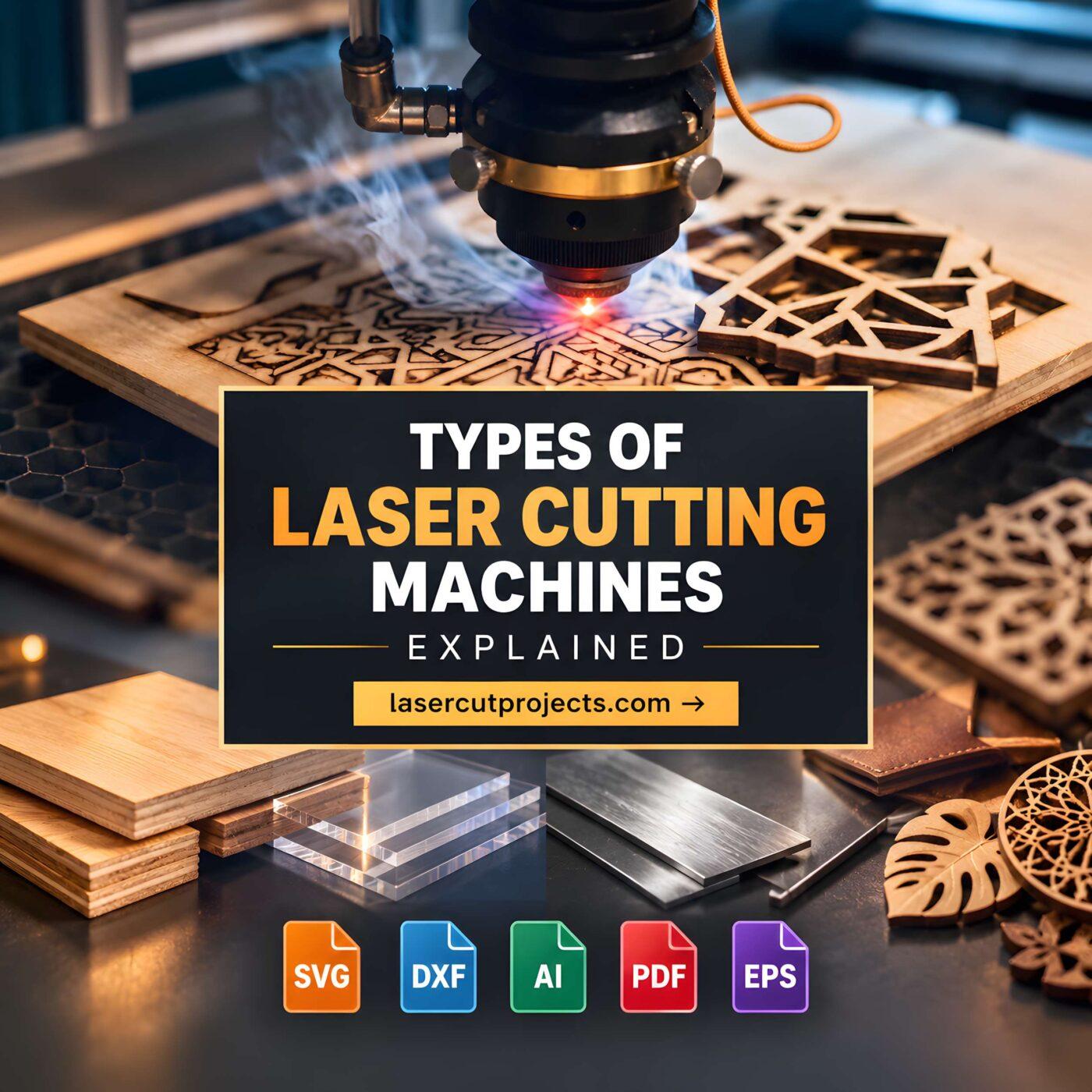
Understanding Types of Laser Cutting Machines and Their Uses
Laser cutting machines have transformed how people create everything from personalized wooden signs to precision metal components. Whether you’re a DIY enthusiast, a small business owner, or a manufacturer, understanding the different types of laser cutting machines can help you choose the right equipment for your projects.
But not all laser cutters work the same way. Some are designed for wood and acrylic, others excel at cutting metals, and certain compact machines are better suited to engraving than cutting.
The four commonly discussed laser technologies are CO2, fiber, diode, and solid-state lasers such as Nd:YAG. Each has different strengths, limitations, operating costs, and material compatibility.

This guide explains how these machines work, what materials they can process, and which options make sense for beginners, creative businesses, and industrial applications.
How Do Laser Cutting Machines Work?
Laser cutting machines use a concentrated beam of light to heat a material until it melts, vaporizes, or undergoes another localized removal process. A motion system guides the beam along a programmed path to produce precise shapes and patterns.
Most laser cutting systems include a laser source, focusing optics, a motion-control system, a work surface, and ventilation or fume extraction. Industrial machines may also use assist gases to remove molten material and improve cut quality.
The process generally follows four steps:
- A design is created or imported using software.
- The machine converts the design into cutting paths.
- A focused laser beam interacts with the material.
- The machine follows the programmed path to complete the cut.
The result depends on laser wavelength, power, beam quality, material properties, cutting speed, and focus.
For a deeper explanation, see our guide on How Does Laser Cutting Work? A Beginner’s Guide.
Main Types of Laser Cutting Machines
The most useful way to distinguish laser cutting machines is by their laser source. This determines which materials they process efficiently and which applications they are best suited for.
1. CO2 Laser Cutting Machines
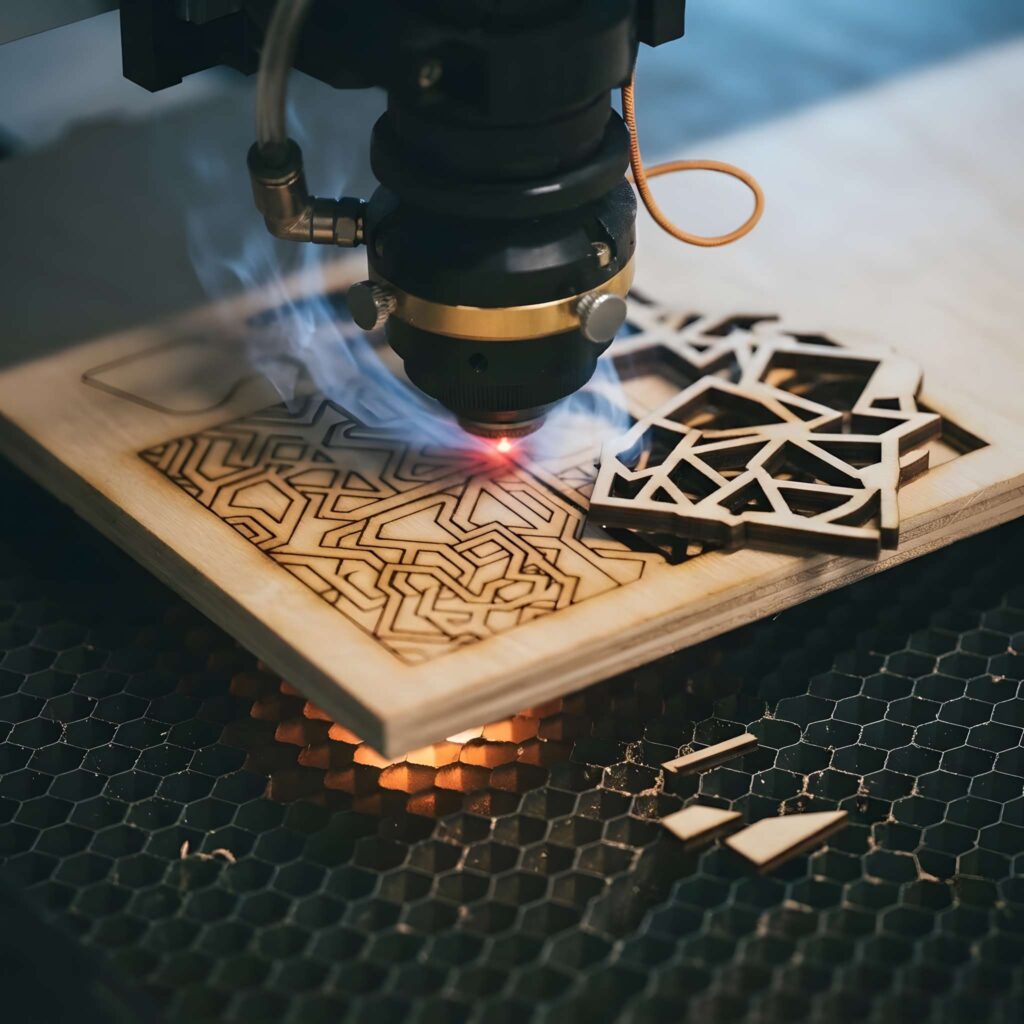
CO2 laser cutters are widely used in sign-making, craft production, model-making, and small manufacturing workshops.
These machines generate infrared laser light using a gas mixture that typically contains carbon dioxide, nitrogen, and helium. Many conventional CO2 systems operate near a wavelength of 10.6 micrometers.
That wavelength is well absorbed by numerous organic materials, making CO2 machines especially useful for creative projects.
Common compatible materials:
- Plywood and suitable solid wood
- Acrylic, including clear acrylic
- Cardboard and paper
- Leather and certain fabrics
- Some laser-approved plastics
CO2 laser cutters can create intricate wooden ornaments, acrylic signs, architectural models, custom packaging, and decorative products.
They are also popular for producing repeatable designs from digital cutting files, including SVG and DXF formats.
Advantages: Versatile for nonmetal materials, good cutting quality, and suitable for both engraving and cutting.
Limitations: Often require cooling, optical alignment, ventilation, and eventual laser-tube replacement. Cutting reflective or thick metals is not practical for most hobby CO2 systems.
Best for: Craft businesses, acrylic signage, wooden decorations, personalized gifts, and detailed laser cutting projects.
2. Fiber Laser Cutting Machines
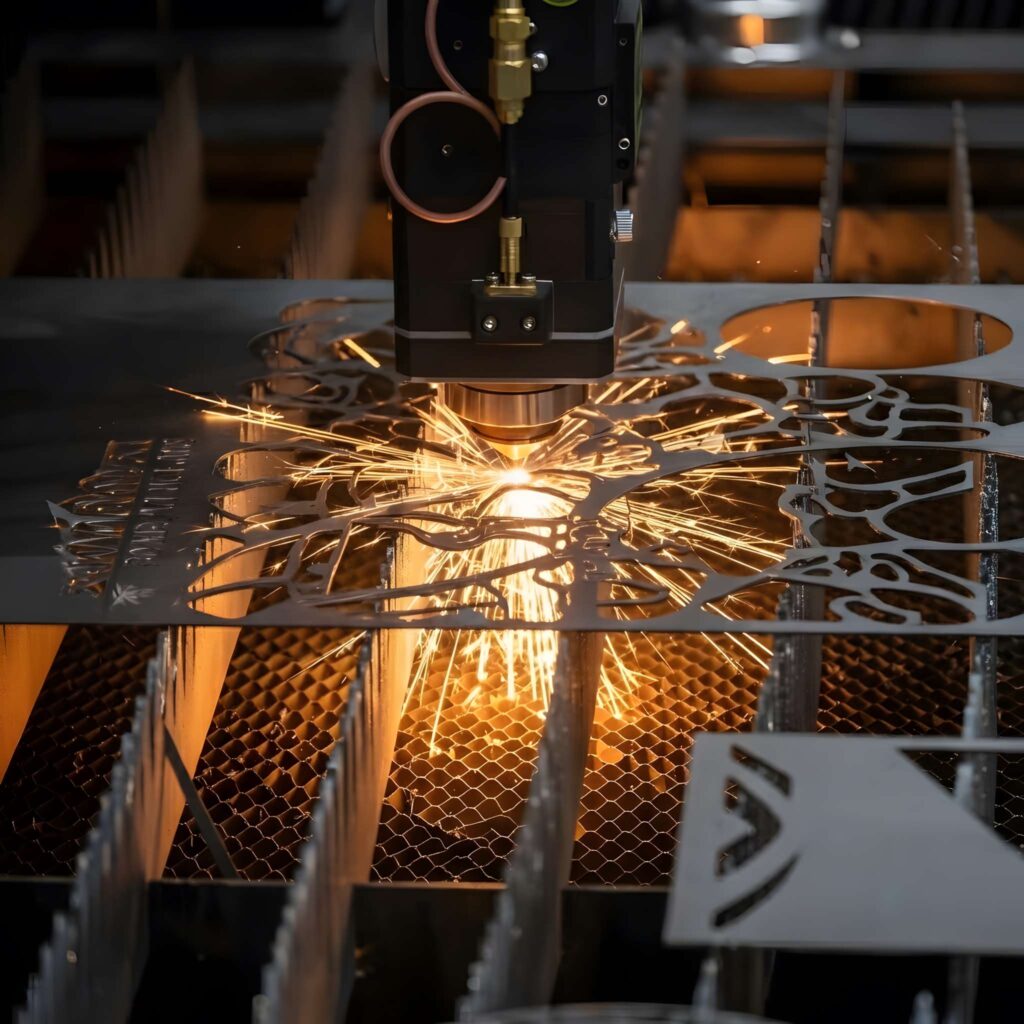
Fiber laser cutting machines are widely used for industrial metal fabrication.
Their laser light is generated and amplified within an optical fiber system. Common industrial ytterbium-doped fiber lasers operate around 1.06–1.08 micrometers, making them effective for processing many metals.
Unlike typical CO2 craft cutters, industrial fiber laser machines are engineered primarily for high-speed metal cutting.
Common compatible materials:
- Mild steel
- Stainless steel
- Aluminum
- Brass
- Copper
- Certain other metal alloys
Fiber laser cutting systems are used to manufacture metal brackets, machine components, automotive parts, electrical enclosures, and architectural metalwork.
Many modern industrial machines include automatic focus control, enclosed cutting areas, assist-gas systems, and automated material handling.
Advantages: High metal-cutting productivity, good electrical efficiency, precision, and relatively low laser-source maintenance.
Limitations: Industrial machines can be expensive and require appropriate electrical infrastructure, extraction, assist gases, and safety systems. They are generally not the preferred choice for cutting wood or clear acrylic.
Best for: Metal fabrication shops, industrial manufacturers, and businesses producing precision sheet-metal components.
Important distinction: A small fiber laser marking machine is not equivalent to a high-power fiber laser sheet-metal cutter. Marking machines are generally designed for surface engraving, not cutting thick metal.
3. Diode Laser Cutting Machines
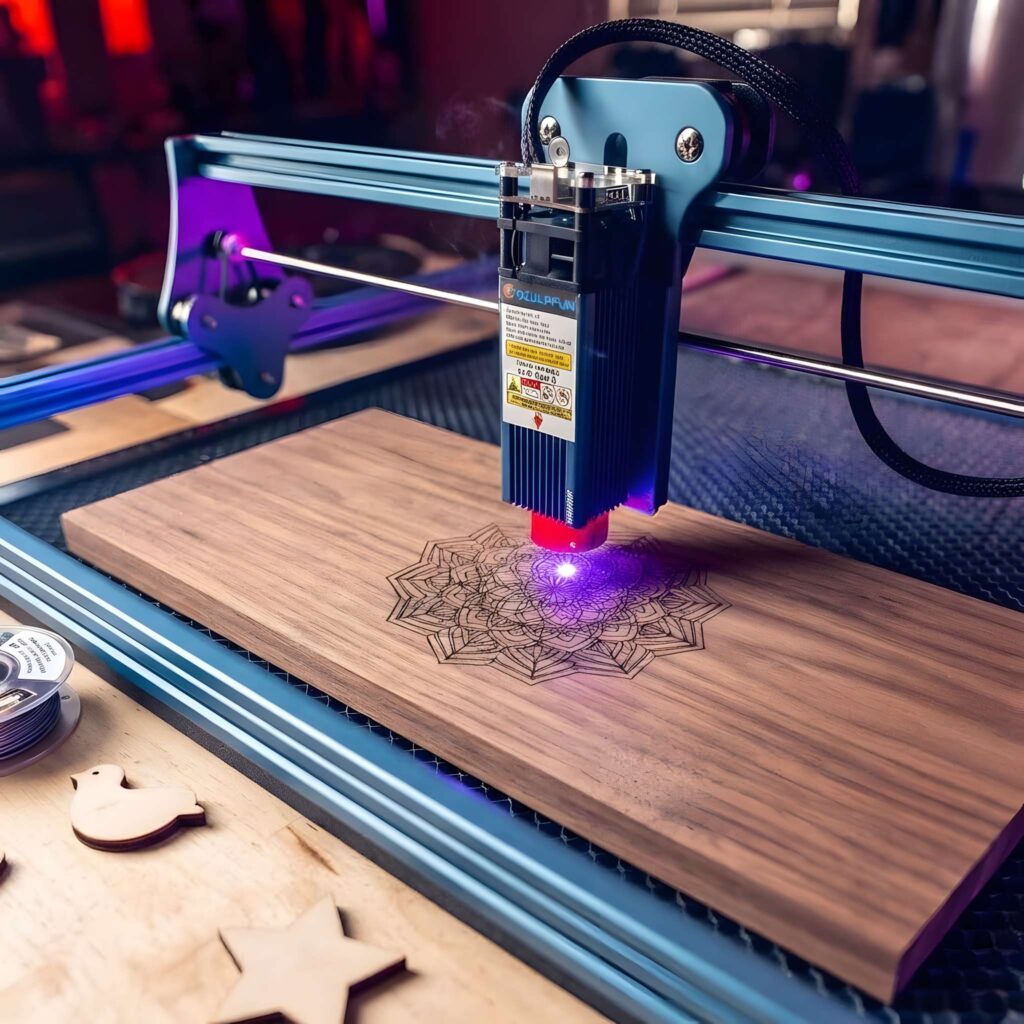
Diode laser machines are among the most accessible options for beginners interested in laser engraving and light cutting.
They use semiconductor laser diodes to generate light. Many consumer blue-diode machines operate around 445–455 nanometers, although other diode wavelengths exist.
Compact diode machines are often marketed as laser engravers because their cutting capabilities are more limited than those of larger CO2 or industrial fiber systems.
Common compatible materials:
- Thin plywood
- Basswood and other suitable woods
- Cardboard
- Paper
- Leather
- Certain dark or opaque acrylic sheets
Blue diode lasers generally cannot cut clear acrylic effectively because the material transmits much of their visible blue light.
Cutting performance also varies substantially with optical output power, focusing, air assist, and material composition.
Advantages: Compact size, relatively low entry cost, approachable software, and good detail for engraving.
Limitations: Slower cutting of thicker materials, limited compatibility with transparent materials, and frequent need for multiple passes. Open-frame models also require especially careful laser safety controls.
Best for: Beginners, hobbyists, personalized gifts, wooden ornaments, and small craft projects.
4. Nd:YAG and Nd:YVO4 Laser Machines
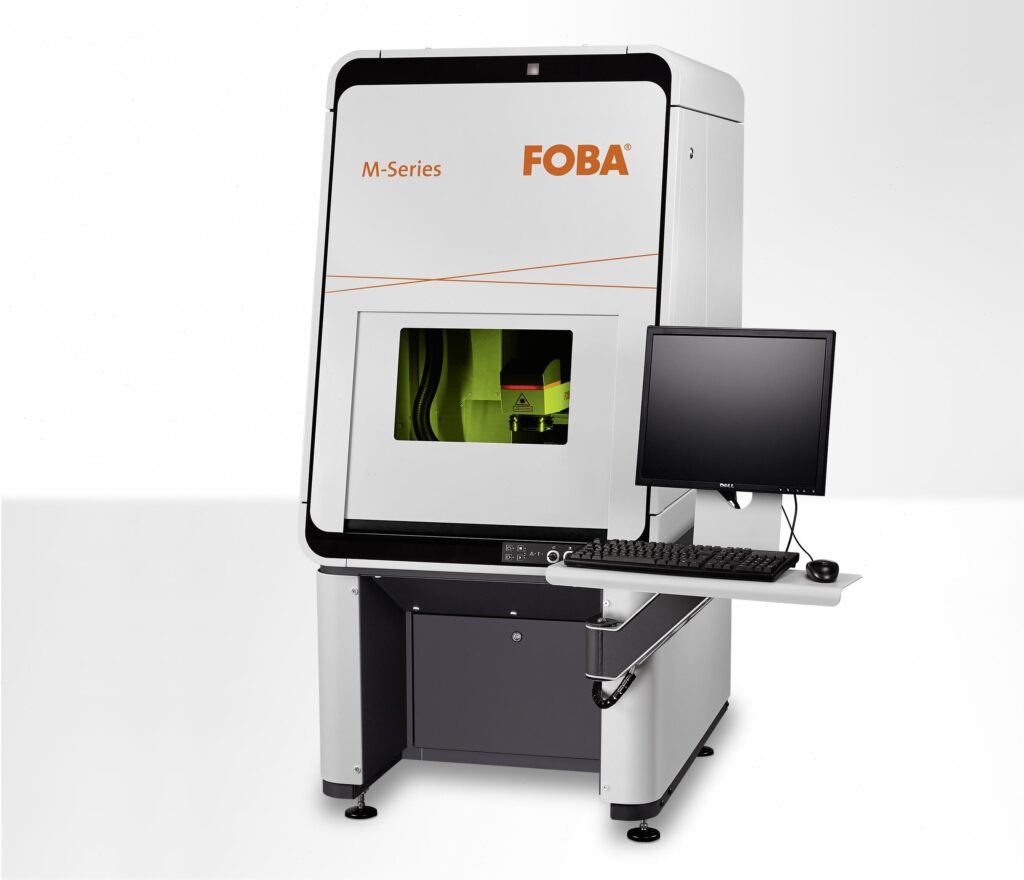
Nd:YAG stands for neodymium-doped yttrium aluminum garnet. Nd:YVO4 refers to neodymium-doped yttrium orthovanadate.
Both are solid-state laser technologies that can produce high-intensity light for precision processing.
They are commonly associated with laser marking, micromachining, drilling, and specialized manufacturing applications. Certain high-power or pulsed systems can also perform cutting tasks.
These technologies are often used where fine features or controlled laser pulses are important.
Typical applications:
- Precision marking of metal components
- Micro-drilling
- Electronics manufacturing
- Medical-device manufacturing
- Specialized precision cutting and micromachining
Advantages: Precise beam control, suitability for pulsed operation, and specialized material-processing capabilities.
Limitations: Equipment selection can be technically complex, and these systems are not usually the most economical choice for general craft cutting.
Best for: Specialized industrial production, precision engineering, and micromachining.
For most people choosing their first craft laser cutter, a CO2 or diode machine will be more relevant than an Nd:YAG system.
Laser Cutting Machine Comparison
The table below summarizes the major differences between the four laser technologies.
| Laser type | Best materials | Cutting capability | Typical use |
|---|---|---|---|
| CO2 | Wood, acrylic, leather, paper | Light to substantial nonmetal cutting, depending on power | Crafts, signs, decorations |
| Fiber | Steel, aluminum, brass, copper | Thin to thick metal, depending on industrial power | Metal fabrication |
| Blue diode | Thin wood, paper, dark acrylic | Light cutting, often multiple passes | Hobby projects |
| Nd:YAG / Nd:YVO4 | Metals and specialized materials | Precision or specialized cutting | Micromachining |
Material absorption and laser configuration are more important than the laser type alone. For example, a low-power fiber marker and a high-power fiber sheet-metal cutter have very different capabilities.
Other Ways Laser Cutting Machines Are Classified
Laser source technology is only one way to categorize equipment. Machines can also be classified by physical design, motion system, and intended application.
Desktop vs. Industrial Laser Cutters
Desktop laser cutters are designed for small workspaces, educational environments, and creative businesses. They generally have smaller cutting areas and lower power requirements.
Industrial laser cutters are designed for production environments where high cutting speed, automation, and repeatability are important.
An industrial machine may include automatic sheet loading, material sensors, production monitoring, and advanced cooling systems.
For a beginner making wooden ornaments, a compact machine may be sufficient. A manufacturer cutting hundreds of steel components daily needs a very different system.
Open-Frame vs. Enclosed Laser Machines
Open-frame laser machines have an exposed or partially exposed working area. They are common among inexpensive hobby diode lasers.
Enclosed machines incorporate protective housings that help control access to the laser beam, contain debris, and support extraction systems.
A properly designed, certified enclosure can significantly reduce exposure risks, but enclosure appearance alone does not establish laser safety.
For indoor workshops and businesses, an appropriately rated enclosed machine is generally preferable.
Galvo vs. Gantry Laser Systems
Another important distinction involves how the laser beam moves.
Gantry systems move the cutting head or workpiece along mechanical axes. They are common in CO2 craft cutters and industrial sheet-metal machines.
Galvanometer (galvo) systems use rapidly moving mirrors to steer the laser beam. They are commonly found in laser marking and high-speed engraving equipment.
Gantry systems are typically suitable for larger cutting areas, while galvo systems excel at fast processing within a smaller field.
Some specialized laser machines combine these approaches.
How to Choose the Right Type of Laser Cutting Machine
Choosing the right machine starts with the materials you want to process, not simply the advertised laser power.
Step 1: Identify Your Main Materials
If your projects primarily use plywood, acrylic, and leather, a CO2 laser cutter is often the most versatile option.
If you mainly want to engrave wooden decorations or cut thin craft materials, a diode laser may provide a more affordable entry point.
For cutting steel, aluminum, or brass, an appropriately powered industrial fiber laser is usually the better choice.
Step 2: Consider Material Thickness
Two machines with similar advertised wattages may perform very differently.
A laser’s ability to cut material depends on its wavelength, actual optical output, focusing system, speed, and material characteristics.
For example, a diode laser may cut thin basswood effectively but struggle with thicker plywood containing dense glue layers.
A CO2 machine may cut the same material more efficiently, but the outcome still depends on the particular machine and material.
Always examine real cutting tests for the thickness and material you intend to use.
Step 3: Evaluate Your Workspace
Before purchasing, consider the space required for the machine and its supporting equipment.
Important factors include ventilation, cooling, electrical requirements, noise, access for maintenance, and safe material storage.
A compact desktop laser may fit on a workbench, but it still needs proper extraction and fire-safety measures.
Industrial fiber cutting machines may require substantial workshop infrastructure.
Step 4: Check Software and File Compatibility
For hobbyists and digital-design businesses, software compatibility is especially important.
Many laser cutting workflows use vector formats such as SVG and DXF, although supported file types depend on the machine’s controller and software.
Before buying, confirm that the machine can import your preferred designs, supports the operating system you use, and provides reliable control over cutting settings.
This is particularly useful if you plan to make projects from downloadable laser cutting files.
Step 5: Compare Total Ownership Costs
The initial purchase price is only part of the cost.
Other expenses may include ventilation equipment, replacement optics, cooling systems, cutting beds, maintenance, software, electricity, and consumable materials.
Industrial systems may also require assist gases, specialized servicing, and operator training.
For a small craft business, the best machine is not necessarily the most powerful. It is the one that reliably produces the intended products at a sustainable operating cost.
Laser Cutting Safety and Maintenance
Laser cutting equipment presents hazards that should be considered before purchasing or operating a machine.
Potential risks include direct and reflected laser radiation, fires, harmful fumes, hot surfaces, and moving mechanical components.
Basic precautions include:
- Use a machine with appropriate protective enclosures and interlocks.
- Provide effective ventilation and material-appropriate fume extraction.
- Never leave a laser cutter unattended while operating.
- Confirm that each material is approved for laser processing.
- Keep suitable fire-response equipment available.
- Follow the manufacturer’s maintenance and cleaning procedures.
- Use laser-rated eye protection where required by the machine’s safety classification and operating conditions.
Never laser-cut PVC, vinyl, or unknown plastics without verifying their composition. Some materials can release corrosive or toxic decomposition products.
Laser safety requirements also vary by machine class, enclosure design, and jurisdiction. Follow the manufacturer’s documentation and applicable workplace regulations.
Final Thoughts
Understanding the different types of laser cutting machines makes it easier to select equipment that matches your projects, materials, and budget.
For creative work involving wood, acrylic, and leather, CO2 laser cutters offer excellent versatility. Diode machines are accessible for beginners focused on engraving and lightweight cutting. Fiber laser systems are better suited to industrial metal fabrication, while specialized solid-state lasers serve precision manufacturing applications.
Before investing in a machine, prioritize material compatibility, realistic cutting performance, safety, software support, and total operating costs.
The right laser cutter is the one that consistently produces the results you need—not necessarily the machine with the highest advertised power.
Frequently Asked Questions
What are the main types of laser cutting machines?
The main technologies include CO2, fiber, diode, and specialized solid-state lasers such as Nd:YAG. CO2 machines are commonly used for nonmetals, fiber lasers for industrial metal cutting, and diode lasers for hobby engraving and light cutting.
Which type of laser cutting machine is best for beginners?
A compact enclosed diode laser can be a practical starting point for beginners working with thin wood, cardboard, and engraving projects. A CO2 machine may be better for users who need more versatile cutting capabilities, particularly for acrylic.
Can all laser cutting machines cut metal?
No. Industrial fiber laser cutters are designed to cut metals, while most hobby diode and CO2 machines cannot cut ordinary metal sheets. Some machines can mark metal surfaces without cutting through them.
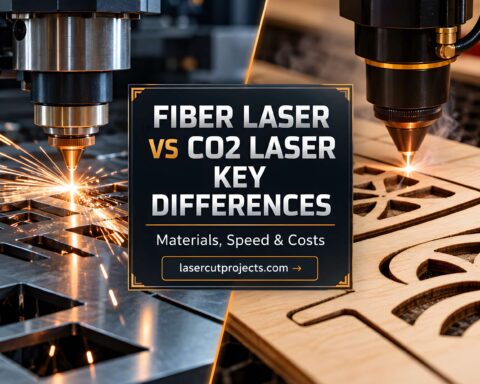
What is the difference between CO2 and fiber laser cutters?
CO2 lasers are generally preferred for wood, acrylic, leather, and similar nonmetal materials. Industrial fiber lasers are optimized for processing metals such as steel, aluminum, brass, and copper. The technologies use different laser wavelengths and optical systems.
Can a diode laser cut acrylic?
Blue diode lasers can cut certain dark or opaque acrylic sheets, depending on the material and laser power. They generally cannot cut clear acrylic effectively. CO2 lasers are a more suitable choice for clear acrylic cutting.
Are laser cutting machines expensive to maintain?
Maintenance costs vary significantly. CO2 machines may require cooling-system care, optics maintenance, and laser-tube replacement. Fiber systems generally require less laser-source maintenance, but industrial equipment still has substantial service and consumable costs.
What is the difference between a laser cutter and a laser engraver?
A laser cutter removes material through its thickness to separate shapes or parts. A laser engraver modifies or removes material at the surface to create text, images, or patterns. Many machines can perform both tasks, but their capabilities depend on power, optics, and material compatibility.
Which laser cutting machine is best for a small business?
For a business selling wooden signs, acrylic decorations, and personalized gifts, a CO2 laser cutter is often a strong choice. A diode laser may suit a smaller engraving-focused business, while metal fabrication requires specialized equipment such as an industrial fiber cutter.