
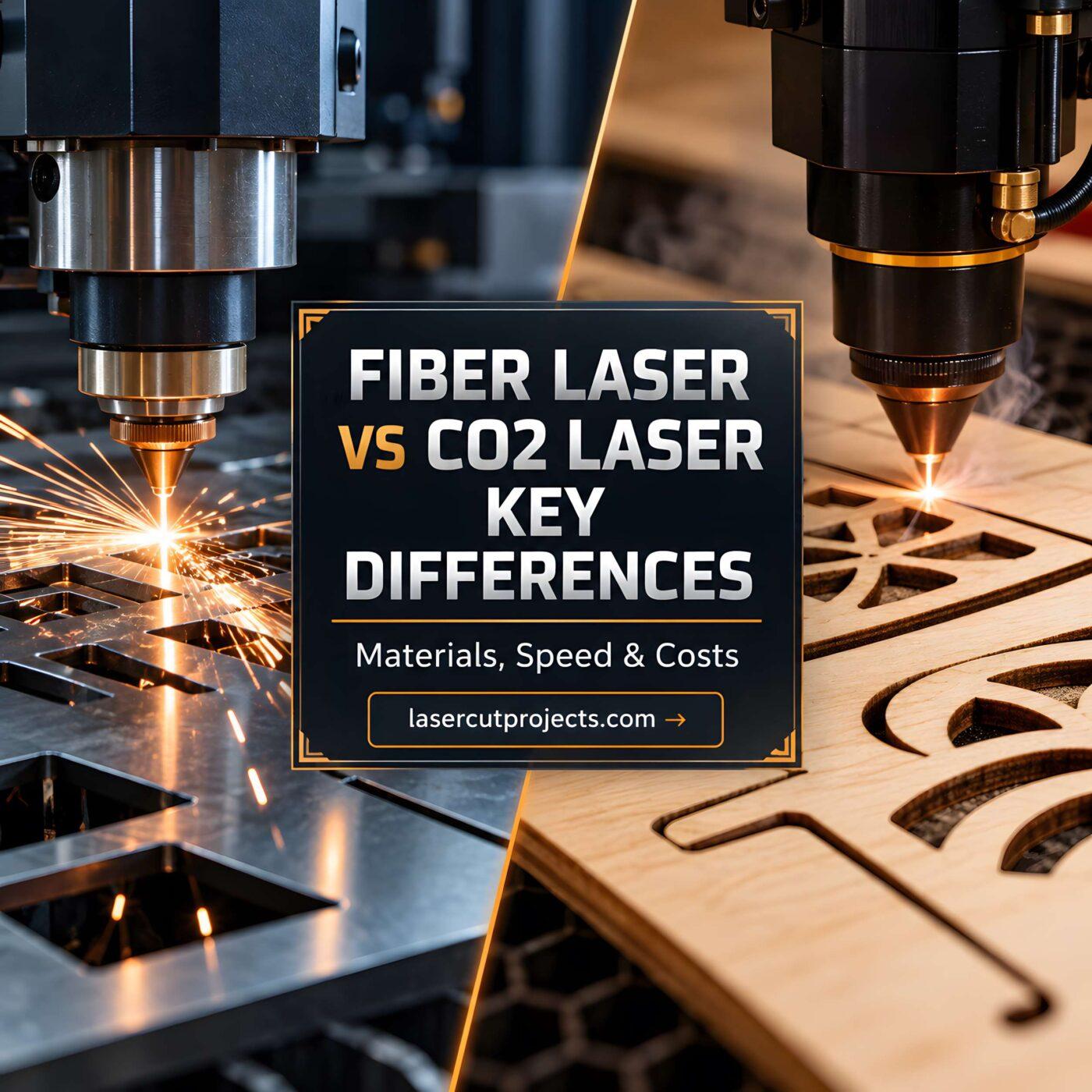
Understanding Fiber Laser vs CO2 Laser Differences and Their Uses
Choosing the right laser cutter can make a huge difference in the quality, speed, and cost of your projects. But when comparing a fiber laser vs CO2 laser, which technology is actually better?
The answer depends on what you’re planning to make.
A fiber laser is generally the better choice for cutting and marking metals, including stainless steel, aluminum, brass, and copper. A CO2 laser is usually more suitable for cutting wood, acrylic, leather, paper, and many other nonmetallic materials.
Both technologies deliver impressive results, but they aren’t interchangeable.
Whether you’re creating metal signs, personalized gifts, wooden decorations, or products for a small business, understanding their differences can help you avoid buying the wrong machine.

In this guide, we’ll compare how fiber and CO2 lasers work, the materials they handle, their cutting performance, operating costs, and which one makes sense for your projects.
Fiber Laser vs CO2 Laser: Quick Comparison
The biggest difference between fiber and CO2 lasers is their wavelength and the materials that absorb their energy effectively. Fiber lasers excel at metal processing, while CO2 lasers are better suited to most common laser-cutting craft materials.
| Feature | Fiber Laser | CO2 Laser |
|---|---|---|
| Laser source | Solid-state optical fiber | CO2 gas laser |
| Typical wavelength | Around 1.06–1.08 µm | Around 10.6 µm |
| Best materials | Metals | Wood, acrylic, leather |
| Metal cutting | Excellent with suitable power | Possible on specialized industrial machines |
| Wood cutting | Generally unsuitable | Excellent |
| Clear acrylic cutting | Generally unsuitable | Excellent |
| Thin-metal speed | Usually faster | Usually slower |
| Energy efficiency | Generally higher | Generally lower |
| Maintenance | Typically less optical-path maintenance | More optics and source maintenance |
| Best for | Metal fabrication and marking | Crafts, signage, and decorative projects |
For most hobbyists making wooden signs, acrylic decorations, ornaments, or laser-cut SVG projects, a CO2 laser is the more versatile option.
For businesses primarily working with metal, fiber laser technology is usually the stronger investment.
What Is a Fiber Laser?
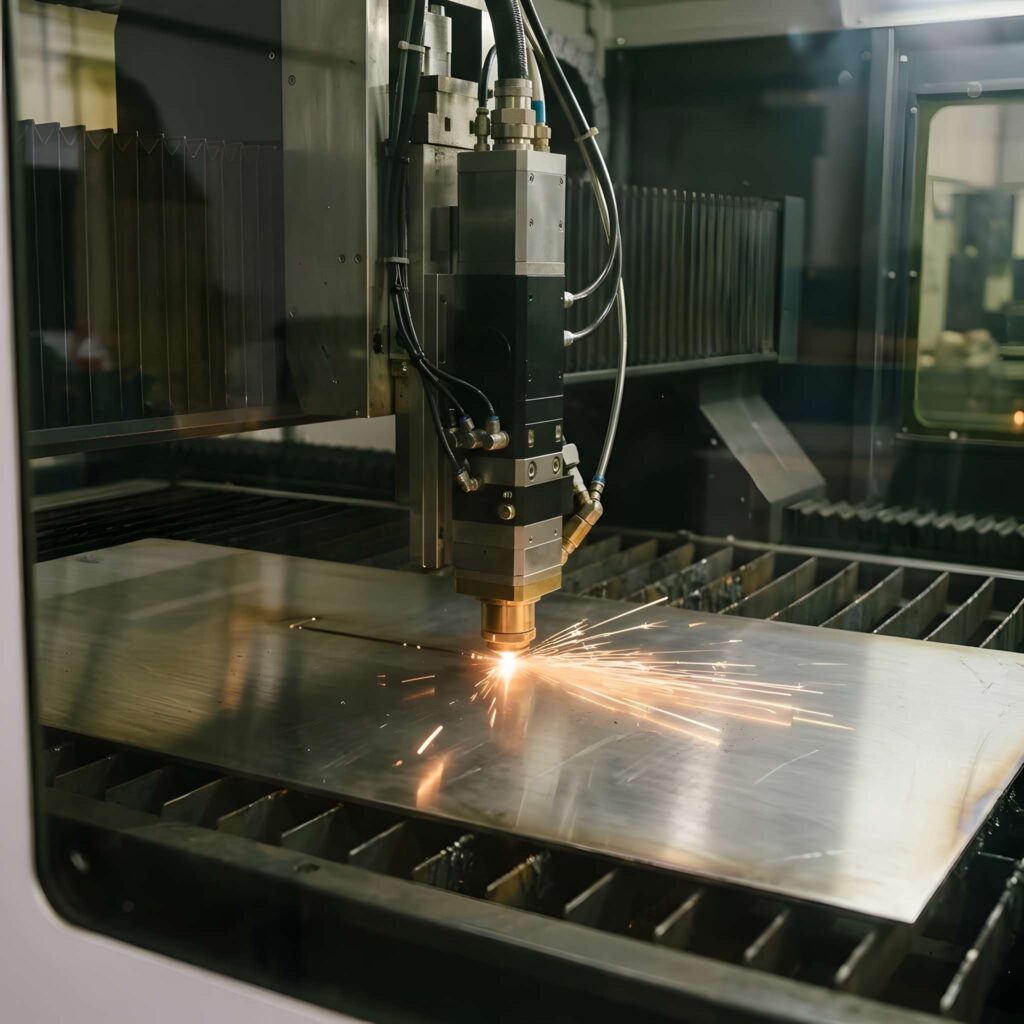
A fiber laser is a solid-state laser that generates light using an optical fiber doped with rare-earth elements, typically ytterbium.
Diodes pump energy into the fiber, producing a concentrated laser beam. The beam travels through optical fiber to the processing head, where it is focused onto the material.
Most industrial fiber cutting lasers operate at wavelengths near 1,070 nanometers.
This shorter wavelength is particularly effective for processing many metals.
Fiber lasers are widely used for sheet metal fabrication, automotive components, industrial machinery, metal signage, and precision manufacturing.
They are also used for engraving and marking metal objects, although small desktop fiber markers are very different from industrial fiber cutting machines.
Advantages of Fiber Lasers
- Excellent performance on many metals.
- High cutting speeds on thin sheet metal.
- Strong electrical efficiency.
- Less beam-path alignment maintenance.
- Good performance on reflective metals when properly equipped.
Limitations of Fiber Lasers
Standard near-infrared fiber lasers generally aren’t suitable for cutting wood, clear acrylic, or the wide range of craft materials commonly processed by CO2 machines.
Additionally, a low-power fiber engraving machine should not be mistaken for a high-power fiber metal cutter. Their capabilities and prices can differ dramatically.
What Is a CO2 Laser?
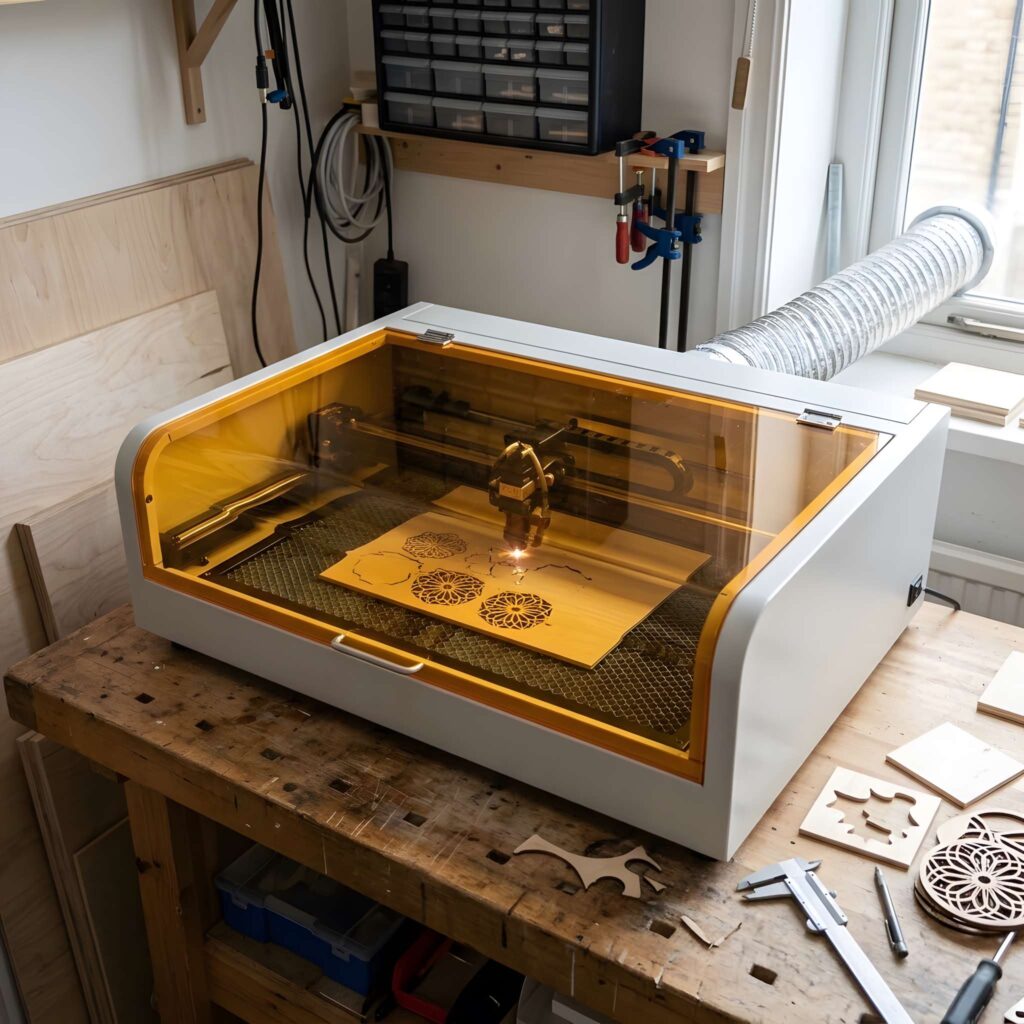
A CO2 laser uses an electrically excited gas mixture containing carbon dioxide to produce a high-energy infrared laser beam.
Its wavelength is approximately 10,600 nanometers, or 10.6 micrometers.
This wavelength is readily absorbed by many organic materials and plastics, making CO2 lasers especially popular for creative projects and small-scale manufacturing.
Unlike most fiber laser systems, conventional CO2 cutters deliver their beam through a series of mirrors before it reaches the focusing lens.
CO2 lasers are commonly used to create wooden decorations, acrylic signs, customized gifts, packaging prototypes, leather accessories, and intricate decorative designs.
Advantages of CO2 Lasers
- Excellent cutting performance on wood and acrylic.
- Useful for many creative and decorative materials.
- Capable of producing polished edges on suitable acrylic.
- Available in desktop and commercial configurations.
- Ideal for many SVG and vector-based cutting projects.
Limitations of CO2 Lasers
Most affordable desktop CO2 lasers cannot cut bare sheet metal effectively. Industrial metal-cutting CO2 machines are a separate category.
CO2 systems also require careful optical maintenance, proper cooling, and effective ventilation.
7 Key Differences Between Fiber and CO2 Lasers
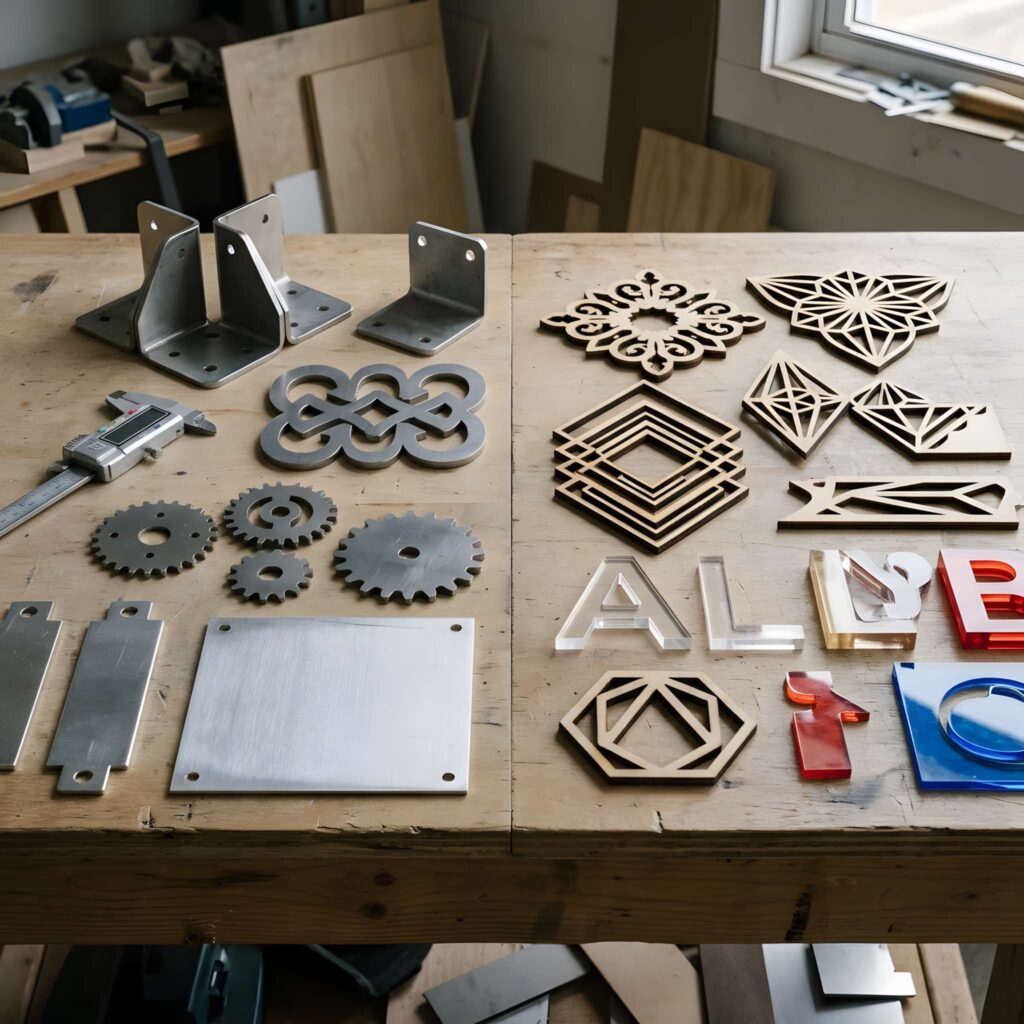
1. Material Compatibility
Material compatibility is the most important difference.
Fiber lasers are designed primarily for metal processing. Their wavelength enables effective energy absorption in steel, stainless steel, aluminum, brass, and copper.
CO2 lasers are generally more versatile for nonmetallic materials.
For example, if you want to create wooden Christmas ornaments or personalized acrylic name signs, a CO2 laser is usually the better choice.
But if your business focuses on cutting metal brackets, stainless steel signs, or aluminum components, a suitably powered fiber laser makes more sense.
Neither technology should be used on an unknown material without first checking its composition and the machine manufacturer’s instructions.
2. Cutting Speed
Fiber lasers often cut thin metal sheets faster than CO2 lasers with comparable output power.
This advantage is particularly valuable in industrial manufacturing, where production time directly affects cost.
According to TWI, advances in fiber-delivered solid-state lasers have improved processing speeds and reduced operating costs in many cutting applications.
However, comparing cutting speed across different materials can be misleading.
A CO2 laser cutting plywood and a fiber laser cutting stainless steel are performing fundamentally different tasks.
Material thickness, laser power, optical quality, assist gas, and cutting settings all influence actual performance.
3. Cutting Precision and Edge Quality
Both fiber and CO2 lasers are capable of precise cutting.
Fiber lasers can produce narrow kerfs and excellent detail in thin metals. Their focused energy also makes them effective for intricate metal components.
CO2 lasers can achieve outstanding results on wood and acrylic, making them popular for decorative designs that contain fine patterns.
For example, a CO2 machine can create detailed wooden mandalas, delicate ornaments, and acrylic letters with smooth edges.
On thicker metal, edge quality depends heavily on the machine and process settings. One laser type does not automatically guarantee a cleaner cut in every situation.
TWI notes that solid-state laser cutting can match CO2 edge quality in thin sheet metal, but achieving good results in thicker sections requires careful process optimization.
4. Purchase Price and Operating Costs
The initial cost depends more on machine class, size, power, and features than on laser type alone.
A small desktop CO2 machine is not directly comparable to an industrial fiber cutter.
CO2 machines are widely available for hobby workshops, while high-power fiber cutting systems generally require significantly greater investment.
For operating costs, fiber lasers often have an advantage in metal production because of their electrical efficiency and reduced beam-delivery maintenance.
However, actual ownership costs must include replacement parts, cooling, ventilation, consumables, service, and machine downtime.
A lower purchase price doesn’t necessarily mean a lower total cost over several years.
5. Energy Efficiency
Fiber lasers generally convert electrical energy into usable laser output more efficiently than conventional CO2 lasers.
That means industrial fiber systems can often deliver comparable laser output with lower source-related electricity consumption.
The actual savings depend on the entire machine, including chillers, motion systems, extraction equipment, and the duty cycle.
For a workshop running long production shifts, efficiency can be an important financial advantage.
For occasional craft projects, however, material compatibility and machine capability should take priority over small differences in electricity consumption.
6. Maintenance Requirements
Fiber laser systems generally require less maintenance of their optical beam-delivery path because the beam is transmitted through fiber rather than an external mirror arrangement.
Traditional CO2 systems may require mirror cleaning, optical alignment, cooling-system maintenance, and periodic laser-source servicing.
Fiber systems aren’t maintenance-free, though.
They still need inspection of protective windows, lenses, cooling systems, extraction equipment, and cutting heads.
The maintenance burden also varies between sealed desktop CO2 tubes and large industrial CO2 resonators.
For businesses, both scheduled servicing and access to replacement parts should factor into the buying decision.
7. Safety and Workshop Requirements
Both laser technologies can cause severe eye injuries, burns, or fires if used incorrectly.
The hazards are not limited to the beam itself.
Laser cutting can produce smoke, fine particles, and hazardous decomposition products, depending on the material.
Fiber lasers typically emit invisible near-infrared radiation, while CO2 lasers also emit invisible infrared radiation. Protective measures must match the wavelength and machine configuration.
An enclosed, properly interlocked system is strongly preferable to an exposed laser.
Always use suitable fume extraction and follow the manufacturer’s requirements for protective equipment, cooling, installation, and fire prevention.
Never cut PVC, vinyl, or unknown plastics without verifying compatibility. Some materials release corrosive or toxic fumes when heated.
Which Materials Can Fiber and CO2 Lasers Cut?
Typical compatibility for appropriately powered systems. Actual capabilities vary by equipment.
| Material | Fiber Laser | CO2 Laser |
|---|---|---|
| Mild steel | Excellent | Industrial systems |
| Stainless steel | Excellent | Industrial systems |
| Aluminum | Excellent* | Specialized systems |
| Brass and copper | Excellent* | Challenging |
| Plywood | Not recommended | Excellent |
| Solid wood | Not recommended | Excellent |
| MDF | Not recommended | Excellent |
| Clear acrylic | Not recommended | Excellent |
| Leather | Generally unsuitable | Suitable with precautions |
| Paper and cardboard | Generally unsuitable | Excellent |
| Glass | Specialized marking | Surface engraving |
| Stone | Specialized marking | Surface engraving |
Reflective metals require a fiber machine designed for the material, with suitable back-reflection protection.
The takeaway is straightforward: if most of your designs involve wood or acrylic, focus on CO2 machines. If your work primarily involves metal, look into fiber lasers.
Which Laser Is Better for Small Businesses?
The best laser for a small business depends on the products being sold.
For Etsy Sellers and Craft Businesses

These products often begin as SVG or DXF designs and can be customized for individual customers.
For example, one vector design can become a wooden wall decoration, an acrylic nameplate, or a personalized gift, provided the design is adapted to the material.
CO2 machines also offer flexibility when experimenting with new product categories.
For Metal Fabrication Businesses
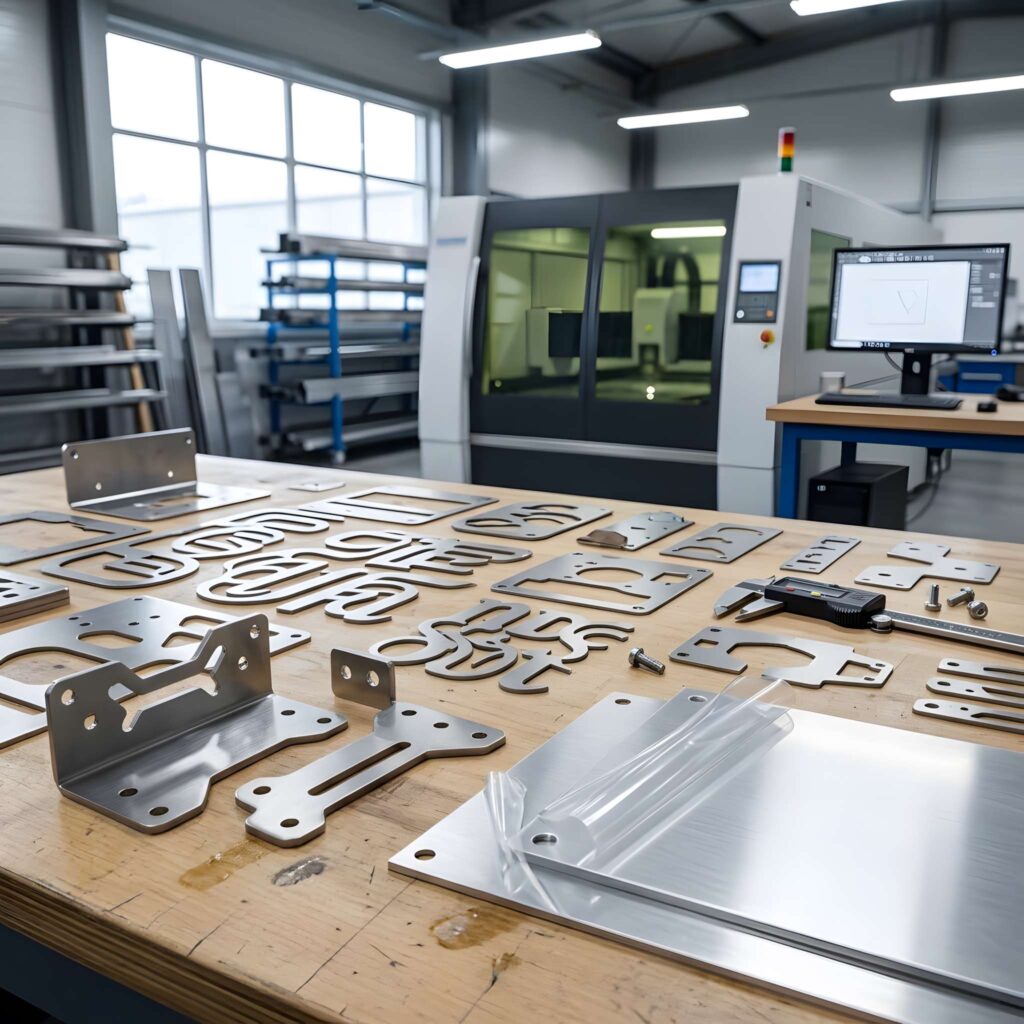
A fiber laser is usually preferable for businesses creating metal components, industrial signs, brackets, custom panels, or sheet-metal products.
Its high cutting speed and energy efficiency can help improve productivity when processing large quantities of metal parts.
However, businesses focused only on marking metal jewelry, tags, or tools may need a fiber engraving system rather than a much more expensive cutting machine.
Always separate laser marking from laser cutting when evaluating equipment.
How to Choose Between a Fiber and CO2 Laser
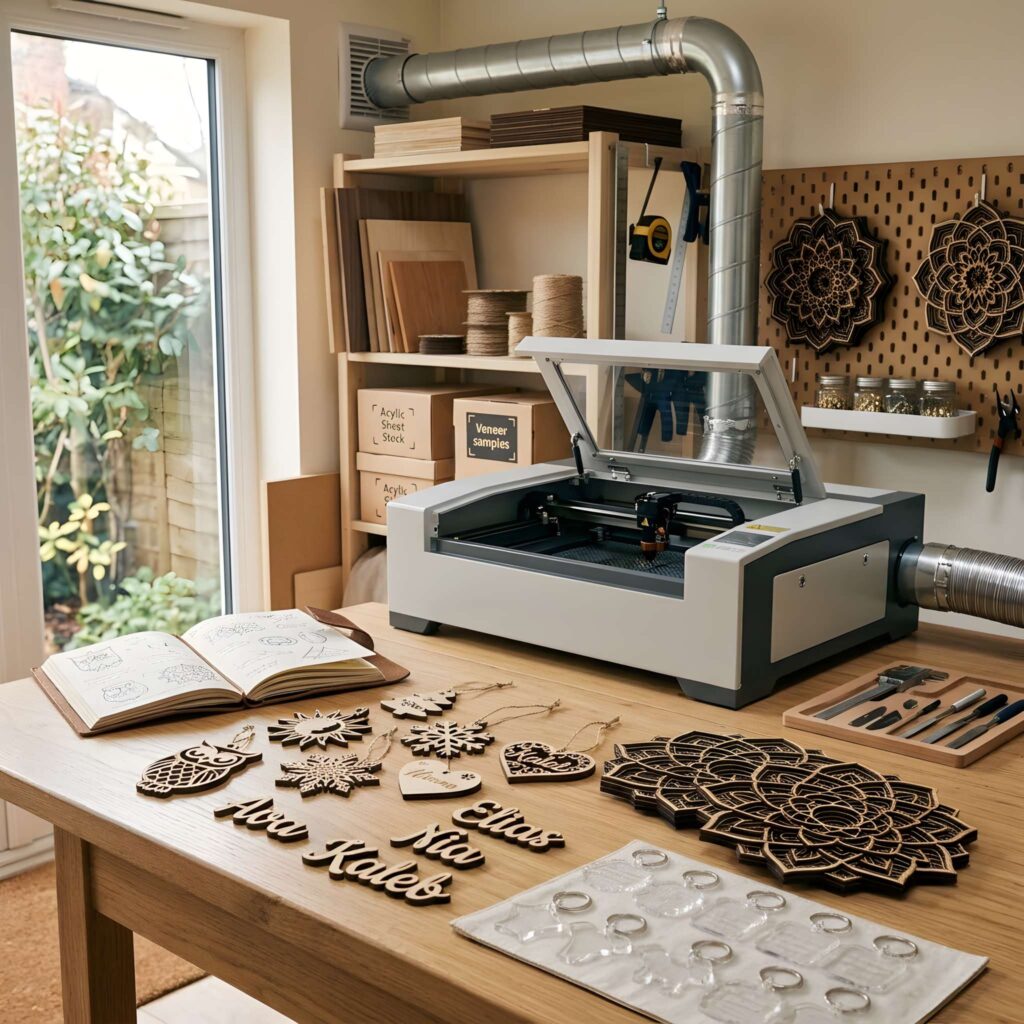
Before purchasing a laser cutter, consider these five factors:
- Your primary material: Choose a technology compatible with the materials you use most frequently.
- Material thickness: Check verified cutting specifications for the exact machine and material.
- Production volume: Frequent, high-volume work makes speed and operating costs more important.
- Workshop requirements: Account for ventilation, cooling, electrical supply, noise, space, and fire protection.
- Total ownership cost: Consider consumables, replacement parts, maintenance, software, and technical support.
It is also worth asking the supplier to demonstrate cuts using your own designs and materials.
A machine’s advertised maximum cutting thickness does not necessarily represent the thickness at which it produces consistently clean, commercially acceptable edges.
If you’re starting with laser-cut craft projects, choosing a reliable CO2 machine that handles your preferred materials may be more practical than investing in industrial equipment.

Final Verdict: Fiber Laser vs CO2 Laser
When comparing a fiber laser vs CO2 laser, the best decision starts with the material you’re planning to cut.
Choose a fiber laser if your main goal is metal cutting, industrial fabrication, or precision metal marking with a suitable machine.
Choose a CO2 laser if you’re creating wooden decorations, acrylic signage, personalized gifts, ornaments, or other craft products.
For most makers interested in downloadable laser-cut SVG files and decorative projects, CO2 technology offers an especially useful combination of material compatibility and creative flexibility.
Before purchasing, compare real sample cuts, machine specifications, maintenance requirements, and the total cost of ownership. The right laser isn’t necessarily the most powerful one—it’s the one that handles your projects reliably.
Frequently Asked Questions
Is a fiber laser better than a CO2 laser?
A fiber laser is generally better for cutting metals, while a CO2 laser is better for common craft materials such as wood, acrylic, and paper. Neither is universally superior because they serve different applications.
Can a fiber laser cut wood?
Standard near-infrared fiber lasers are not recommended for cutting wood. Wood does not absorb their wavelength in the same way as it absorbs CO2 laser radiation, making CO2 machines the practical choice for wooden projects.
Can a CO2 laser cut metal?
Yes, sufficiently powerful industrial CO2 laser systems can cut metals, including steel. However, typical hobby-grade CO2 machines are designed for nonmetallic materials and cannot reliably cut bare sheet metal.
Which laser is better for acrylic cutting?
A CO2 laser is the better choice for acrylic cutting. Its wavelength is well absorbed by acrylic, allowing efficient processing and potentially smooth, polished edges on suitable cast acrylic.
Which laser is faster for cutting metal?
Fiber lasers are generally faster when cutting thin sheet metal at comparable power levels. Actual cutting speed depends on the material, thickness, laser power, cutting head, and assist-gas settings.
Are fiber lasers more expensive than CO2 lasers?
Prices vary considerably. High-power industrial fiber cutting machines can be expensive, while small fiber marking machines and desktop CO2 cutters occupy different price categories. Compare machines with similar capabilities rather than laser sources alone.
Which laser is better for engraving?
CO2 lasers are excellent for engraving wood, acrylic, and leather. Fiber lasers are particularly suitable for marking many metals. The best engraving technology depends on the surface material and desired result.
Can a fiber laser cut stainless steel?
Yes. Industrial fiber lasers are widely used to cut stainless steel with high precision. Achievable thickness and edge quality depend on the equipment’s power, optics, process settings, and assist gas.
Is a CO2 laser good for beginners?
A well-designed enclosed CO2 machine can be an excellent option for beginners interested in woodworking, crafting, and personalized products. Beginners should still receive proper safety training and understand ventilation, fire risks, and material restrictions.